seasonal
Winterizing Your Garage Door in Northwest Arkansas: 2026 Cold-Snap Checklist
Arkansas winters stress garage door springs, openers, and seals. Six prep steps to do before the first hard freeze in Fayetteville and NWA.
By Robert Bell · November 12, 2025
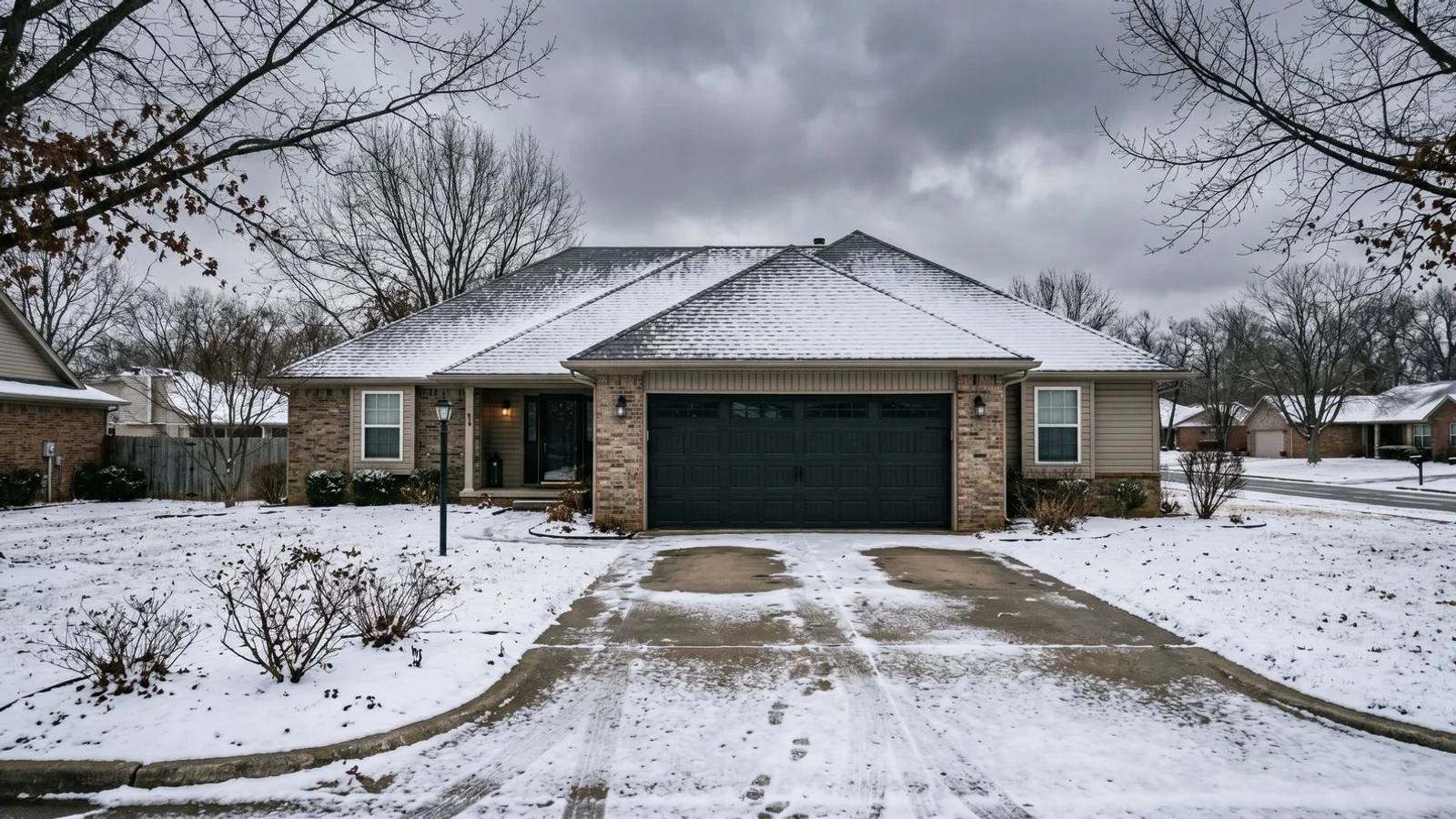
Northwest Arkansas winters are unpredictable. Some years we get a mild cool stretch and the door barely notices. Other years — like January 2024’s cold snap — we see overnight lows in the single digits and a wave of broken-spring calls within 48 hours.
The reason: cold weather stresses everything in the garage door system. Springs lose elasticity. Lubricants thicken. Weather seals shrink and gap. Openers strain against a colder, heavier door. A door that was running fine in October can fail catastrophically the morning of the first hard freeze.
This is your pre-winter checklist. Six things to do in November or early December so your door makes it through January and February without an emergency call.
1. Switch to a Cold-Weather Silicone Lubricant
If you’re using lithium-based grease or — worse — WD-40 on your rollers and hinges, swap to a silicone-based garage door lubricant before the first freeze. Silicone stays flexible at low temperatures and doesn’t gum up the way petroleum-based products do.
Apply lubricant to the roller bearings, hinges, the torsion spring coils (a thin coat only), and the opener chain or screw drive if you have one. Don’t lubricate belt-drive openers — the belt is designed to run dry.
2. Inspect the Bottom Weather Seal
The astragal — the rubber strip along the bottom of the door — keeps cold air, water, and pests out. In Arkansas, the temperature swings between summer and winter cause the rubber to harden, crack, and eventually pull away from the door. If your seal is more than 6 years old, it’s almost certainly time to replace.
Stand inside the closed garage and look along the bottom. Daylight visible through the seal means you have a gap. A new astragal is a 30-minute fix during a tune-up visit and dramatically reduces winter heat loss in attached garages.
3. Check Door Balance Before the Cold Arrives
Cold air makes a garage door slightly heavier (steel contracts and lubricants thicken, adding resistance). If your springs are already 80% through their cycle life, the cold can be the trigger for failure.
Pull the red emergency release cord and lift the door manually about halfway. A properly balanced door should stay in place when you let go. If it falls or rises, the spring tension is off — and if it’s noticeably heavier than last year, the springs are nearing end of life.
4. Test the Opener’s Force Settings
Cold-weather operation puts extra strain on the opener motor. Most modern LiftMaster, Chamberlain, and Genie openers have adjustable force settings — the amount of resistance the motor can push through before it reverses. If the settings are too high, the door won’t reverse when something blocks it (a safety problem). Too low and the door will reverse on cold mornings just because the system is slightly heavier.
If your opener is reversing unexpectedly in cold weather, it’s not always the sensors — it could be a force setting that’s too sensitive for winter operation.
5. Listen for New Noises
Garage doors develop new noises in cold weather because thickened lubricant, contracted steel, and harder weather seals all combine. Most of the time the noise is harmless and resolves once the system warms up during the day. But sharp metallic bangs, grinding from the opener, or new squeaks from a specific roller are worth investigating before they get worse.
If a sharp bang happens during operation — especially overnight or in the early morning — stop using the door. That sound is almost always a torsion spring snapping.
6. Book Your Tune-Up Before December
We’re busiest in late January and February with emergency calls from broken springs and failed openers — most of which would have been caught by a pre-winter inspection. November and early December are the best time to book an annual garage door maintenance tune-up because we have open slots and the work catches problems before the cold magnifies them.
Our standard 20-point inspection covers all the items above plus springs, cables, drums, rollers, hinges, tracks, hardware, sensors, opener function, balance, and a written report. Most NWA homes need 60 to 90 minutes of attention once a year. The cost is a fraction of what a broken-spring emergency call runs.
When to Call Right Away
Some symptoms shouldn’t wait for a scheduled tune-up. Call us immediately if:
- The door is noticeably heavy when you lift it manually
- You hear a sharp metallic bang during operation
- The opener strains, grinds, or won’t open the door fully
- One side of the door hangs lower than the other
- The door won’t close securely at night
Any of those means a structural component is on the edge of failure, and operating the door makes it worse fast.
Call (479) 469-8829 to book a pre-winter inspection. We’ll get you on the schedule before the first freeze.