Bent Panel & Track Repair
Why Garage Door Panels Get Bent or Damaged
Vehicle impact, storm damage, basketball impact, age cracking, and NWA hail damage — five real causes of bent garage door panels.
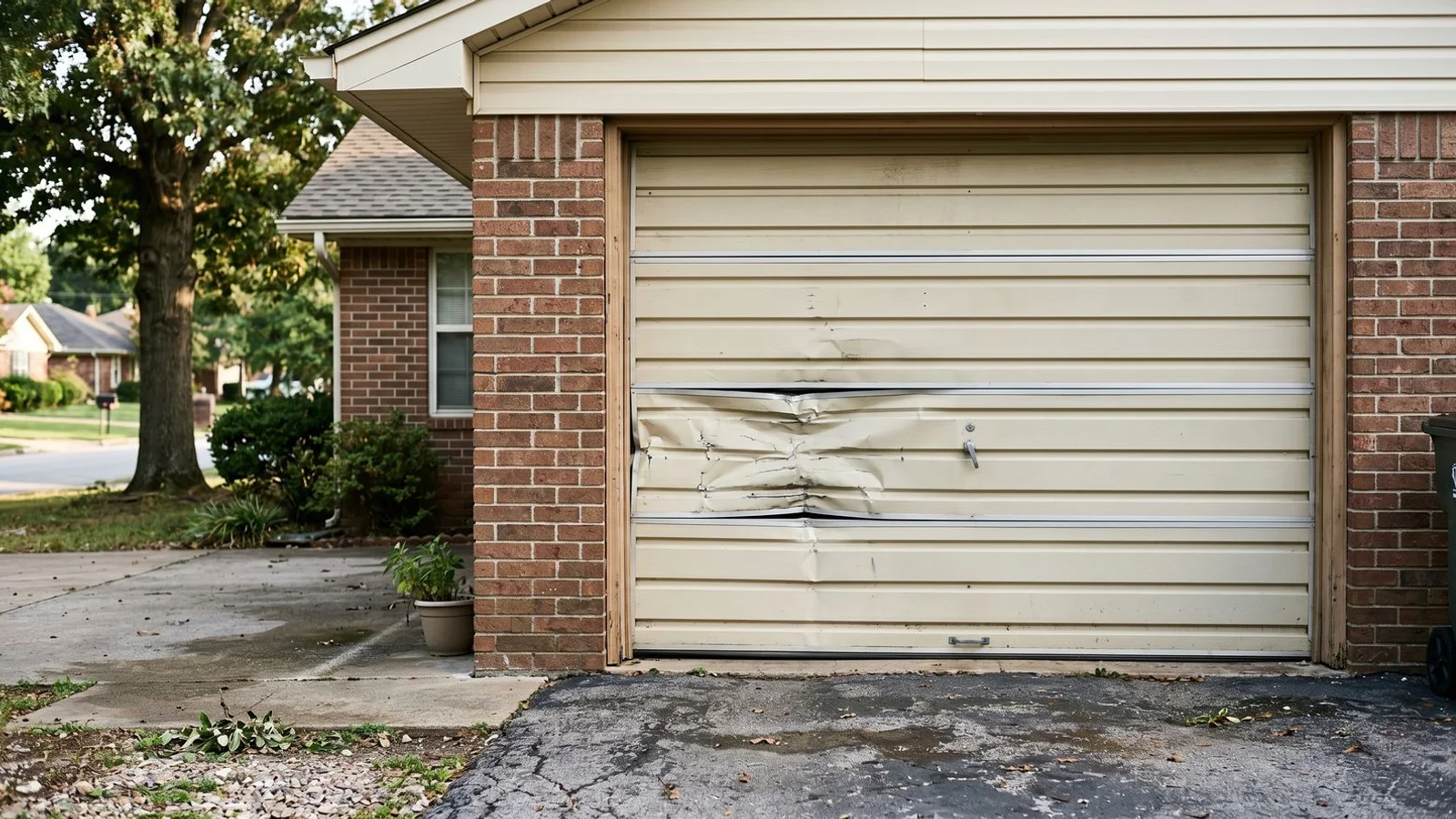
We often see homeowners caught off guard by a ruined track or a buckling door, but the truth is that most structural failures start with a single, ignored dent.
That initial impact is usually the dividing line between a quick fix and a costly replacement. Garage door panel damage causes usually fall into a few very predictable categories across the US.
Our technicians at Garage Doors of Fayetteville have tracked these specific failure points for years. Understanding what actually compromised your system helps you decide whether a patch job or a full upgrade makes financial sense.
1. Vehicle Backing Into the Door
A vehicle striking a closed or moving garage door remains the most frequent reason for a dented bottom section. Drivers simply back out before the machine fully opens or fail to notice the tracks coming down.
We receive calls constantly from US homeowners dealing with this exact scenario. The bumper impact forces the bottom panel inward, which places immense stress on the entire tracking system and motor.
Single-car doors measuring 8 feet wide handle these impacts differently than heavy 16-foot double doors. Repairing a single steel panel currently averages between $250 and $800, depending on manufacturer availability from major brands like Clopay or Amarr, and our team evaluates severity based on these specific impact zones:
- Minor face denting: Cosmetic issues rarely affect the motor. You can sometimes pull these out with a heat gun, or you can simply leave them alone.
- Creased panel sections: Deep creases compromise the structural integrity. Swapping out a single section is usually the smartest financial decision here.
- Roller detachment: A bent garage door that twists off the track requires an immediate safety repair. This means resetting the tracking system alongside any panel work.
- Multi-panel distortion: If two or more sections are crushed, full replacement makes the most sense.
2. Storm and Wind Damage
High winds from severe US storms create massive negative pressure that bows a garage door inward. This constant flexing stresses the horizontal panel seams until the metal physically tears.
We frequently see this structural failure after major weather events like derechos or straight-line winds. Modern building codes and organizations like DASMA now require specific wind-load ratings for new installations, but millions of older non-rated models remain highly vulnerable.
A standard non-reinforced door can easily buckle under 90 mph wind gusts. Upgrading to a properly braced wind-load rated model provides a massive defense against severe weather blowouts, and our post-storm service logs typically show clusters of calls for these specific issues:
- Cracked panel seams: The center hinges bear the brunt of wind pressure and split the metal casing.
- Bent interconnecting hinges: Intense wind stress warps the joints that hold the sections together.
- Track misalignment: Extreme pressure shifts the tracks entirely out of plumb with the foundation.
- Debris impact damage: Flying branches easily tear through rubber bottom seals and dent the lowest sections.
3. Hail Damage
Hailstones larger than one inch in diameter strike at high velocities and easily puncture standard metal surfaces. A garage door panel dent caused by a severe US hailstorm is rarely an isolated issue.
We often inspect large, flat steel panels that have become heavily peppered after a sudden spring storm. Standard 25-gauge steel sections dent quite easily under golf ball-sized hail, leaving craters across the entire facade.
A detailed inspection is necessary to determine if the damage is purely cosmetic or if it affects the door’s actual movement. Shallow dimples might look bad, but they usually allow the rollers to function normally along the track, leaving us to evaluate the following patterns during a typical hail impact assessment:
- Peppered steel surfaces: Dozens of small, scattered dimples spread across the top three sections.
- Deep individual craters: Isolated structural damage caused by unusually large chunks of ice.
- Micro-fractured paint: Tiny chips at the impact zones that quickly expose the raw steel to rust.
4. Basketball and Sports Impact
Driveway sports cause slow, accumulative stress that eventually compromises the center panels of a garage door. Repeated impacts from a basketball slowly stretch the metal until the entire section bows inward.
We regularly replace doors in busy US family neighborhoods where the driveway serves as the primary recreation area. A heavy projectile like a baseball or a hockey puck can destroy a thin panel in a single, unlucky strike.
The thickness of your steel directly dictates how well it handles these daily impacts. Builders often install builder-grade 25-gauge or 26-gauge steel panels to save money, but these thinner materials dent with minimal force, leading our technicians to recommend a few practical solutions for active households:
- Relocate the hoop: Moving the play area away from the driveway eliminates the primary risk factor entirely.
- Upgrade to 24-gauge steel: This thicker metal costs slightly more upfront but provides superior dent resistance against flying balls.
- Install heavy-duty struts: Adding structural bracing behind the most vulnerable sections can prevent future bowing.
5. Age-Related Cracking and Seam Failure
A well-maintained steel garage door typically lasts 15 to 30 years before metal fatigue sets in. Once a unit passes the 15-year mark, the horizontal seams and hinge points naturally begin to crack under their own weight.
We view this type of age-related tearing as a definitive sign that the system has reached the end of its functional life. Years of opening and closing weaken the structural integrity until the sections literally start pulling apart.
Extreme temperature swings across the US force the metal to expand and contract daily, which speeds up this deterioration process. Internal insulation materials like polystyrene also begin to degrade, reducing both energy efficiency and panel rigidity alongside several specific environmental factors that accelerate this inevitable decline:
- Daily thermal expansion: Hot summers and freezing winters warp the metal on a microscopic level.
- Long-term wind flex: Decades of wind pressure slowly weaken the primary joints.
- Hidden moisture corrosion: High humidity levels trap water near the bottom seal and eat away at the skin.
- Foundation settlement: Minor shifts in the driveway create uneven stress on the tracks and rollers.
6. Repair vs Replace Decision
The financial line between fixing a dent and buying a brand-new system depends heavily on the door’s age and the total number of compromised sections. A single, targeted fix is highly cost-effective if the rest of the machinery remains in pristine condition.
We constantly help homeowners weigh these two options using a simple math-based approach. A complete replacement often provides a better return on investment than patching up a deteriorating frame.
Current industry data from 2025 shows that a full garage door upgrade yields one of the highest returns on investment for exterior home improvements. You can easily visualize the financial breakdown by comparing the typical costs and lifespans side by side.
| Damage Scenario | Expected Cost Range | Recommended Action | Long-Term Value |
|---|---|---|---|
| Single panel under 10 years old | $400 to $800 | Section Replacement | Excellent. Preserves the lifespan of a healthy door. |
| Two or more crushed panels | $1,500 to $3,500+ | Full Door Upgrade | Very Good. Labor savings justify the materials. |
| Any damage over 15 years old | $1,500 to $3,500+ | Full Door Upgrade | Maximum. Prevents a cascade of upcoming mechanical failures. |
| Insurance-backed storm damage | Deductible dependent | Full Door Upgrade | Excellent. Policies often cover replacements for widespread dimpling. |
Our detailed panel repair vs replace decision guide outlines this exact framework in much greater depth. You should explore that resource if you are struggling to make a final financial call.
Call (479) 469-8829 to schedule a free panel damage assessment. We will document all garage door panel damage causes for your insurance provider and provide an honest recommendation on the smartest path forward.
Frequently Asked Questions
Will my homeowner's insurance cover panel damage?
Often yes — especially for storm, hail, or vehicle impact. We can write up the assessment to support an insurance claim.
Can I keep using my door with a bent panel?
If the door operates and the panel is only cosmetically damaged, yes for short term. Structurally damaged panels should be repaired before continued use.
How much does panel replacement cost?
Single-panel swap typically $300 to $600 for the panel plus $150 to $250 install — much less than a full new door.