Garage Door Opener Repair & Service
Garage Door Safety Sensors: How They Work and How to Align Them
How photo-eye safety sensors work, the UL 325 federal requirement, and how to self-align them in 60 seconds before calling a tech.
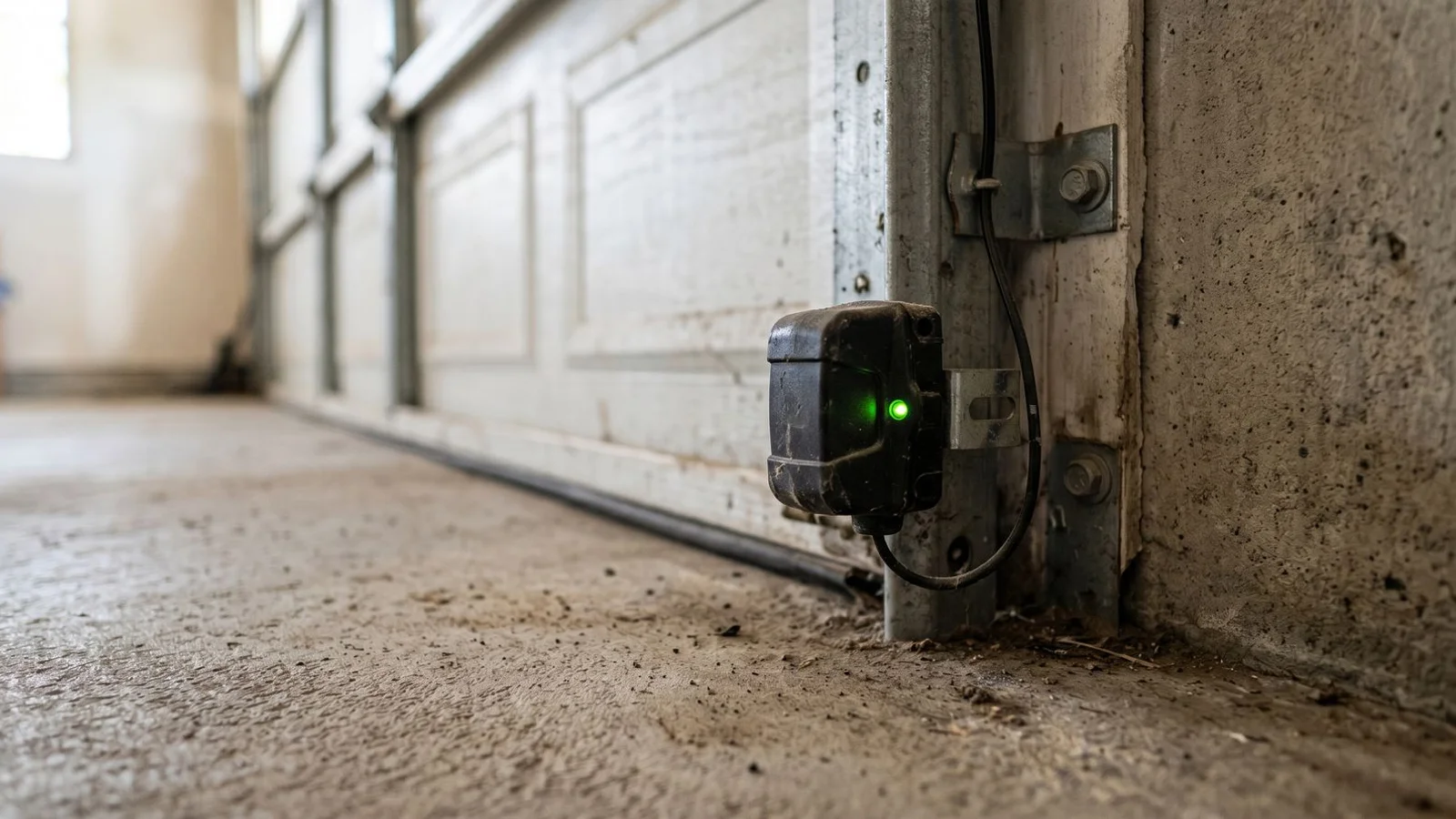
You probably do not think about your garage door safety sensors until the door refuses to shut.
We, the experts at Garage Doors of Fayetteville, see this issue constantly across Northwest Arkansas. A malfunction in this area is the top reason a system locks up.
These small devices prevent the heavy door from closing on people, pets, or your vehicle.
Our team will walk you through exactly how they work and how to perfect your garage door safety sensor alignment. Let us decode the flashing lights and get your system running safely again.
How Photo-Eye Sensors Work
A standard installation features a pair of small sensors mounted at the bottom of each vertical track. The U.S. building code requires these to sit no higher than six inches off the floor. One unit is the sender, emitting an invisible infrared beam across the opening. The receiving sensor sits on the opposite side to detect that exact beam.
When you press the wall button or remote, the motor performs a quick safety check.
The system relies on three specific steps to operate:
- The logic board verifies the receiving eye detects a solid, uninterrupted beam.
- The door begins to close only if the pathway remains completely clear.
- The motor reverses the door immediately if a pet or object breaks the beam during descent.
Our technicians test this binary system on every routine service call. There is no partial detection feature.
If the sensor beam breaks, the modern operator immediately defaults to a constant-pressure mode. You would then have to hold the wall button down continuously to force the door closed.
The LED Color Code
Each sensor housing includes a small LED light that broadcasts its current status. Both lights must remain steady and solid for normal operation. If one goes out, your door will not close automatically.
Manufacturers use slightly different color combinations to signal these statuses. We highly recommend checking your specific brand, but most follow a predictable pattern. Chamberlain and LiftMaster models use a yellow and green system, while Genie openers typically rely on red and green lights.
| Sensor Type | Typical Color | Solid Light Meaning | Blinking or Off Meaning |
|---|---|---|---|
| Sender | Amber or Yellow | Sending beam normally | Off: Unpowered or failed wire |
| Receiver | Green | Receiving beam clearly | Blinking: Misaligned or blocked |
60-Second Self-Alignment
Newer operators, like the LiftMaster Security+ 2.0, will actually flash a diagnostic code when the sensors fail. A common error is a 1-1 code, meaning the up arrow flashes once and the down arrow flashes once. Your main overhead light might also click exactly 10 times to warn you of an obstruction.
Our team uses a quick 60-second routine to clear these errors. This simple process resolves the majority of sensor complaints.
- Clear the pathway. Move any rakes, boxes, or bicycles away from the floor area.
- Wipe the lenses carefully. Use a clean, dry microfiber cloth to remove dust and spider webs.
- Check for hanging obstructions. Look for ropes or debris dangling from the bottom door panel.
- Nudge the brackets gently. Tap the misaligned sensor lightly until the green receiving light turns solid.
Do not force or bend the metal brackets severely. The alignment window is usually within just a few degrees. You will likely need professional service if the light continues to blink after these steps.
UL 325 Federal Requirement
The Consumer Product Safety Commission enacted the strict UL 325 garage door safety standard back in 1993. Every residential garage door operator manufactured in the United States since that date must include a secondary entrapment protection mechanism. This usually means installing the standard infrared photo eye sensors.
Tampering with these devices is a federal safety violation. Our installers see homeowners try to bypass these sensors, which creates a massive liability. The motor logic board requires these sensors to function to protect your family.
Bypassing the sensors defeats a critical failsafe designed to stop accidents. You should always repair a malfunctioning system rather than trying to disable the alert.
Family Safety Framing
These infrared devices exist entirely to prevent the door from crushing a person, pet, or vehicle. A standard US residential double garage door measures 16 feet wide and weighs anywhere from 150 to 400 pounds. This amount of descending weight creates more than enough force to severely injure a child caught underneath.
National data from 2026 shows that over 1,600 injuries still occur annually across the US due to garage door accidents.
We prioritize sensor health because it is your first line of defense. Get your system serviced immediately if the photo eye sensors start failing intermittently.
Common Sensor Failures
Sensors endure a harsh environment down near the concrete floor. They face constant exposure to moisture, dirt, and accidental kicks.
Alignment and Visibility Issues
Proper garage door safety sensor alignment is critical because misalignment happens frequently from accidental bumps with trash cans or feet. You can usually fix this with a quick physical adjustment. Dirty lenses are another common culprit, especially when dust or spider webs accumulate over the soft plastic. A gentle wipe down restores full function quickly.
Sun blindness is a frustrating issue where direct sunlight overwhelms the receiving lens at certain times of day. Many online videos suggest taping a toilet paper tube over the sensor to block the glare.
We suggest a much better permanent fix. You can simply swap the two sensors so the green receiving eye sits permanently in the shade on the other side of the track.
Wiring and Hardware Failures
Sensor wires run along the metal tracks and easily get pinched by vibrating hardware. The fix requires repairing the damaged copper wire or installing a fresh sensor pair. The internal electronics also break down naturally after 10 to 15 years of daily use.
Our current 2026 pricing data shows that a complete replacement of both sensors typically costs between $125 and $300. This price heavily depends on the brand of the opener and whether the technician needs to run new wiring through the walls.
When to Call
Sometimes a DIY safety sensor fix is not enough to get the heavy door moving safely. A professional diagnosis saves time and ensures your property remains secure.
Our technicians are ready to help if you experience any of the following technical problems:
- Both LED lights are solid but the door still refuses to close.
- The indicator lights remain completely off, signaling a power failure.
- The thin communication wires look visibly pinched or severed.
- Your door reverses unexpectedly despite a totally clear concrete path.
- The motor unit clicks loudly 10 times but produces no physical movement.
Basic garage door safety sensor alignment and repair usually run between $85 and $150. Call (479) 469-8829 for opener and sensor service across NWA. Our local team will respond quickly to get your garage secured.
Frequently Asked Questions
Why does my door start to close then go back up?
The safety sensors see something — either a blocked beam, misalignment, or a failing sensor. Check the LEDs first.
Can I bypass the safety sensors?
No — that's a federal UL 325 safety violation and dangerous to people and pets. Repair the sensors instead.
How sensitive are the sensors?
Very. They detect any object that breaks the infrared beam — including spider webs, leaves, or accumulated dust on the lenses.