Glass Garage Door Installation
Tempered vs Laminated Glass for Garage Doors Compared
Safety-glass behavior comparison, cost difference, sound-dampening, and code requirements for full-view doors.
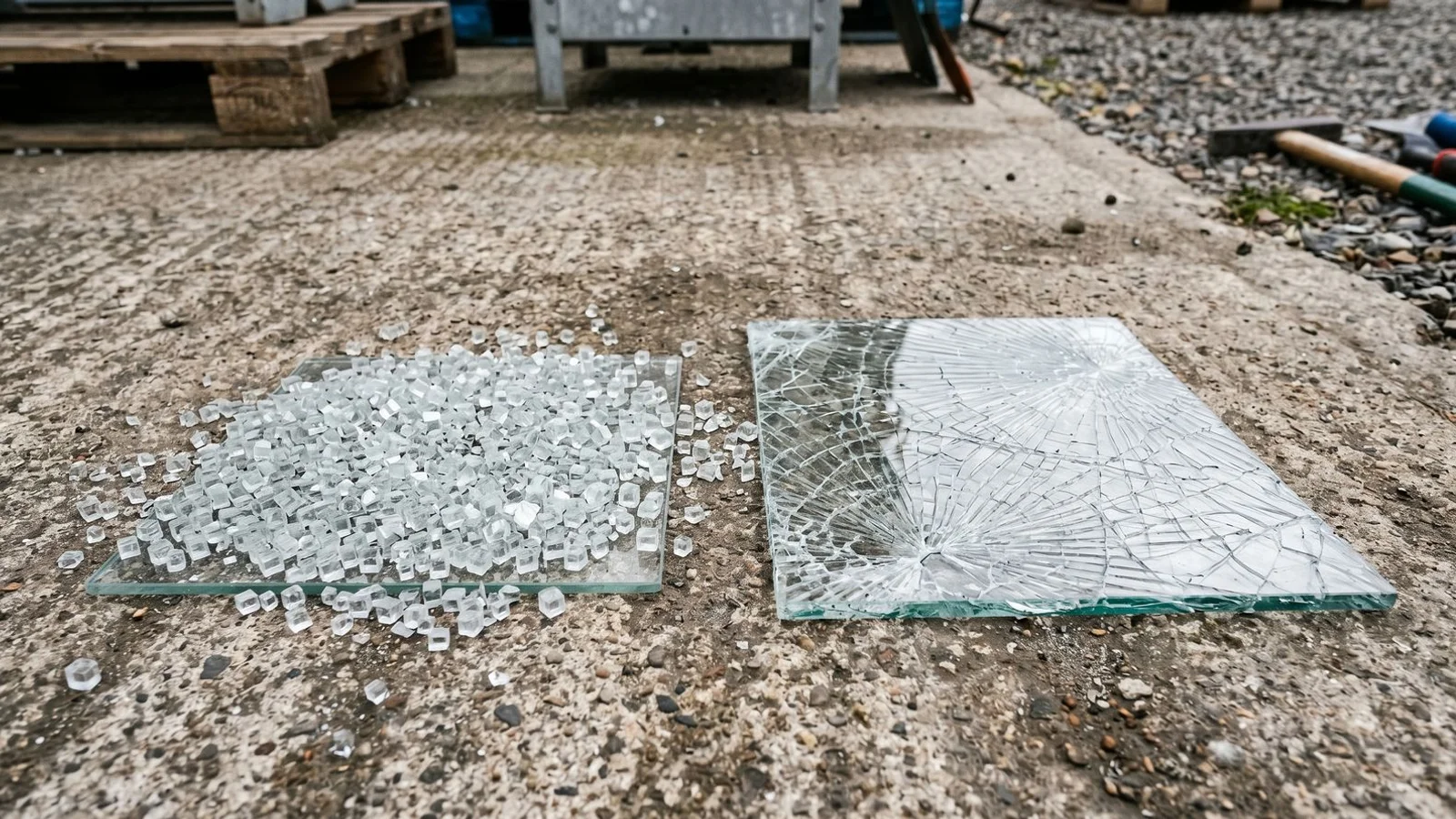
We know that choosing a tempered vs laminated glass garage door often feels like a guessing game. Both materials qualify as safety glass under UL 325 regulations, but they react to impacts in completely different ways.
Making the right choice determines how well your garage blocks street noise, withstands severe weather, and prevents break-ins.
Recent 2026 industry data shows a massive trend of homeowners treating the garage as a primary living space.
As the local experts at Garage Doors of Fayetteville, our team will walk you through a detailed glass door comparison and analyze their current market costs. You will get a clear look at acoustic performance ratings, specific code requirements, and practical recommendations for your exact needs.
How They Behave When Broken
Tempered glass shatters into small, harmless cubes upon impact, while laminated glass cracks but remains held together by a strong plastic inner layer. This fundamental difference dictates the safety profile of your entire garage door system.
We recommend understanding the manufacturing process behind these distinct behaviors. Tempered glass undergoes an extreme heat-treatment process that makes it four to five times stronger than standard window panes. A severe impact forces the high surface tension to release instantly. The glass immediately breaks into pea-sized, dull chunks instead of dangerous, jagged shards.
Laminated panels take a completely different approach to structural failure. Manufacturers sandwich a tough, flexible plastic interlayer, usually made of polyvinyl butyral (PVB), between two solid sheets of glass. A rock or heavy tool might shatter the glass layers, but the PVB core holds everything firmly in place. The cracked panel stays securely within the garage door frame as a single sheet.
Safety Fact: Because it prevents dangerous glass shards, tempered glass is mandated by law for most automotive side windows, while laminated glass is strictly required for windshields to prevent occupant ejection.
Cost Difference
Upgrading from tempered to laminated glass typically adds between $300 and $1,200 to the total cost of a new residential garage door in 2026. Laminated glass commands this premium because it requires more raw materials and a complex, pressurized manufacturing process.
We constantly review pricing data to give you the most accurate budget expectations. A standard tempered glass garage door averages around $4,000 in today’s market. A fully laminated setup pushes closer to $5,200.
This 30% price jump reflects the undeniable structural benefits of the PVB interlayer. The exact premium depends heavily on the scale of your installation.
| Application Type | Tempered Glass Baseline | Laminated Glass Premium |
|---|---|---|
| Single Garage Door Panel | Standard Material Cost | +$50 to $150 |
| Full Residential Door | ~$4,000 Average | +$300 to $1,200 |
| Commercial Storefront | ~$5,000+ Average | +$500 to $1,500 |
Sound Dampening Advantage of Laminated
Laminated glass offers superior sound dampening capabilities, reducing outside noise by up to 38 decibels compared to a standard uninsulated door. The thick PVB interlayer physically absorbs acoustic vibrations before they can enter your home.
We measure acoustic performance using the Sound Transmission Class (STC) rating system. A higher STC rating translates directly to less street noise bleeding into your workshop or living space. Laminated window configurations consistently achieve higher STC scores than standard tempered setups.
Here is the verifiable acoustic breakdown for typical glass garage door installations:
- Tempered single-pane: Achieves roughly 28 dB of sound reduction.
- Tempered insulated double-pane: Blocks about 30 dB of outside noise.
- Laminated insulated double-pane: Provides a significant 35 to 38 dB noise reduction.
Our local installation history shows this acoustic upgrade makes a massive difference in specific environments. You will notice the benefits immediately if your property faces a high-traffic area.
These noise-blocking properties provide major relief for:
- Residences located along busy thoroughfares, such as College Avenue in Fayetteville or Pinnacle Hills Parkway in Rogers.
- Commercial properties requiring distinct acoustic separation between loud warehouse operations and quiet client-facing areas.
- Restaurants and cafes with outdoor seating zones situated near loud traffic.
Security Comparison
Laminated glass provides exceptional break-through resistance, acting as a sturdy barrier even after the glass panes crack. Tempered glass shatters completely upon impact, leaving an open hole that intruders can easily climb through.
We consistently emphasize that tempered glass is incredibly strong against blunt force. A stray baseball or minor hail impact will likely bounce right off. But a determined intruder equipped with a heavy tool can destroy a tempered pane in seconds.
Laminated panels neutralize this specific security threat through their unique structural design. The tough polyvinyl butyral core acts like a flexible, catching net. A burglar might crack the outer layers of glass, but breaching the PVB layer demands sustained, noisy effort with significant physical force.
Security Pro-Tip: Most residential break-ins occur at the front door or hidden ground-level windows. Installing laminated glass on your garage door becomes a critical investment only if you store valuable tools, protect classic cars, or use the space as a primary home office.
Our residential clients usually find tempered glass perfectly adequate for standard neighborhood security. Commercial storefronts, automotive showrooms, and high-end retail spaces should definitely invest in the laminated upgrade to protect valuable floor inventory.
Code Requirements
Both tempered and laminated glass satisfy the mandatory safety regulations outlined by UL 325 and the International Residential Code (IRC). The law requires safety glass in any garage door panel to prevent severe lacerations from accidental breakage.
We strongly advise checking local municipal building codes before ordering your new door. Under IRC Section R308.4, glazing in doors is legally classified as a “hazardous location.” This national mandate strictly prohibits the use of standard, non-treated window glass in any overhead door application.
Key regulatory frameworks governing a safety glass garage door include:
- UL 325: Dictates overall electrical and mechanical safety standards for residential and commercial door operators.
- IRC Section R308.4: Classifies all door glazing as hazardous, demanding rated safety glass for residential applications.
- CPSC 16 CFR Part 1201: The federal safety standard that specifies exactly how architectural glazing materials must perform and safely break upon impact.
Laminated glass often becomes a strict legal requirement in specific commercial and coastal environments. Building codes in hurricane-prone zones mandate impact-rated laminated glass to resist dangerous airborne debris. Public schools, healthcare facilities, and heavy industrial workshops frequently require laminated panels for enhanced occupant protection.
When a Tempered vs Laminated Glass Garage Door Is the Right Pick
Tempered glass is the most cost-effective choice for standard home installations, while laminated glass is the superior option for high-security or excessively loud environments. Evaluating your specific neighborhood conditions and overall budget will clearly dictate the best material.
We find that identifying your primary daily use for the garage makes this decision straightforward. Choose the appropriate material based on your top priority for the space.
Best Applications for Tempered Glass
Tempered panels provide excellent value and proven durability for standard use cases. Consider this option for:
- Premium new construction and modern architectural homes wanting a sleek, updated look.
- Detached garages that do not house expensive equipment or connect directly to the main living area.
- Commercial back-of-house areas where front-window security is not a primary concern.
- Budget-conscious renovation projects seeking a major aesthetic upgrade.
Best Applications for Laminated Glass
Laminated panels offer premium protection against street noise, severe weather, and forced entry. This upgrade makes perfect sense for:
- Commercial storefronts, including bustling restaurants, boutiques, and automotive showrooms.
- Residential properties located near busy streets where blocking 35+ dB of noise is a daily necessity.
- High-security residential garages storing luxury vehicles, motorcycles, or expensive power tools.
- Homes subjected to severe weather patterns, as the PVB layer handles heavy wind-loads and flying debris much more safely.
Hybrid Approach
A hybrid installation uses standard tempered glass for the upper sections of the door and sturdy laminated glass for the lower sections. This strategic layout combines cost efficiency with targeted security exactly where your property needs it most.
We frequently utilize this customized method for clients who want maximum value without compromising on ground-level safety. Intruders and kicked-up flying debris typically strike the bottom half of a garage door. By reinforcing just the lower panels with a tough PVB interlayer, you achieve a high level of break-through resistance while keeping the overall project budget very manageable.
Design Tip: You can mix and match glass opacities in a hybrid approach. Many smart homeowners choose frosted laminated glass on the bottom panels for privacy and security, while installing clear tempered glass on top to maximize natural sunlight.
This mixed configuration also works brilliantly for controlling low-level sound transmission from street traffic. Discussing a hybrid layout is an excellent first step if you desire premium features but face strict financial constraints.
NWA Climate Considerations
Both tempered and laminated glass perform exceptionally well against the intense summer heat and freezing winter temperatures found in Northwest Arkansas. Neither safety glass option degrades, warps, or weakens from the region’s notoriously high summer humidity levels.
We highly recommend upgrading to an insulated double-pane configuration to maximize your home’s thermal efficiency. Adding climate-specific glass features provides distinct, year-round benefits:
- Low-E Coatings: This microscopic metallic layer reflects harsh solar heat away during August heatwaves.
- Argon Gas Insulation: Upgrading to gas-filled double panes keeps your garage significantly warmer during January cold snaps.
Our installation team applies durable, commercial-grade weatherstripping to ensure your new glass door seals tightly against the unpredictable Arkansas elements. See our glass garage doors service page for full options. Call (479) 469-8829 to discuss whether a tempered vs laminated glass garage door layout is right for your specific application.
Frequently Asked Questions
Which glass is required by code?
Safety glass (tempered or laminated) is required for garage door panels. Tempered is the minimum; laminated adds break-through resistance.
Does laminated glass cost more?
Yes — about 30% more than tempered. Worth it for commercial storefronts and homes prioritizing security or sound dampening.
Can a person fall through tempered glass?
Tempered shatters into small dull cubes — much safer than untreated glass. But laminated holds together even when broken, preventing fall-through entirely.