Composite Overlay Garage Doors
How to Care for Your Composite Overlay Garage Door
Gentle cleaning, hardware tightening schedule, what to never use on composite, and when to call for resealing.
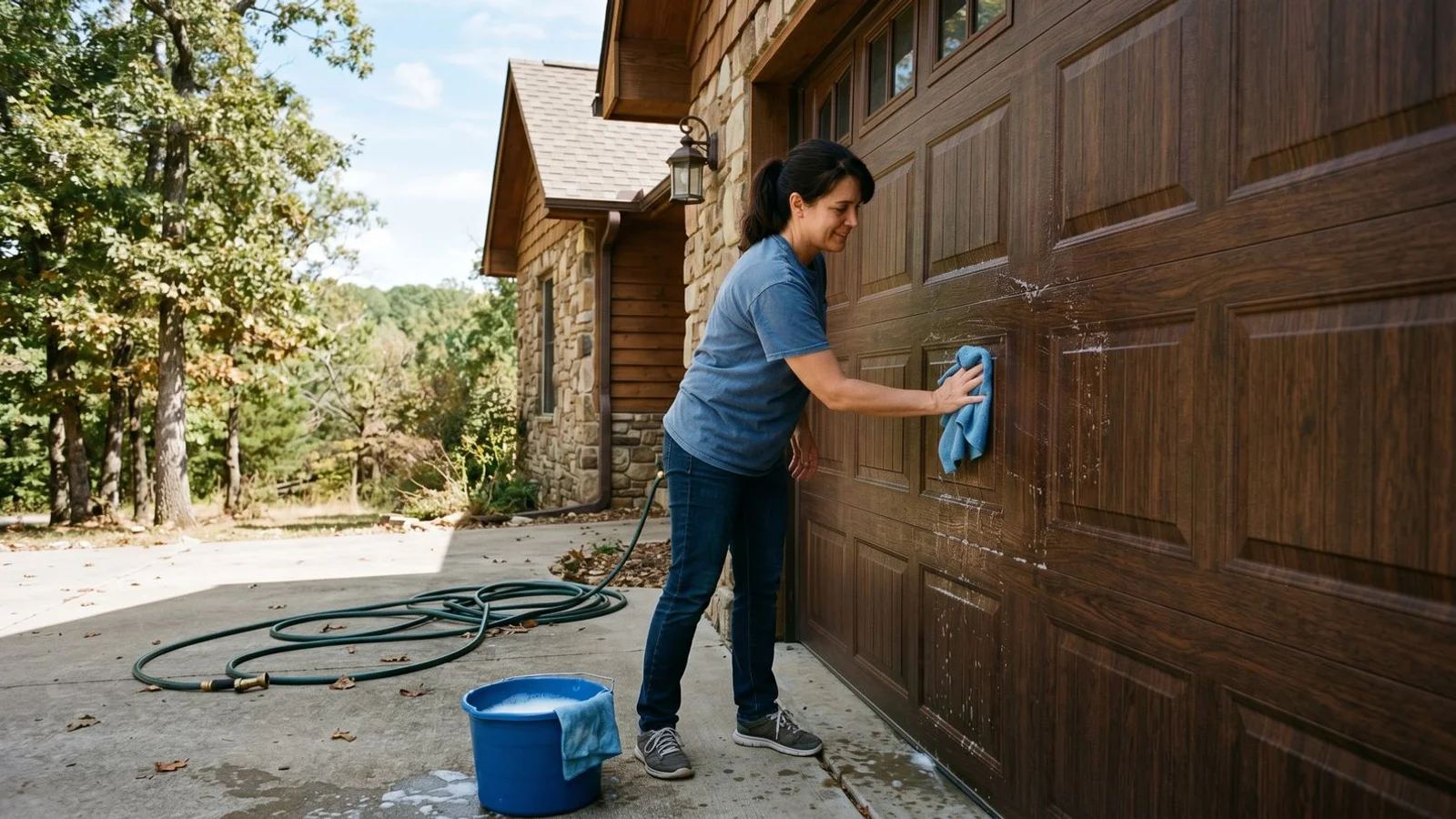
Composite overlay garage door maintenance requires far less effort than real wood.
From what I have seen across the US in 2026, premium models like the Clopay Canyon Ridge can cost anywhere from $1,200 to over $6,000 to install. Protecting that investment requires specific, targeted care. Our team at Garage Doors of Fayetteville handles these exact systems every day.
This material is incredibly durable against the elements, but neglecting the basic composite door care rules can still cause premature wear. We are going to outline the exact cleaning methods and hardware checks your door needs.
Key maintenance areas we will cover:
- Proper washing techniques and safe soaps.
- The correct hardware tightening schedule.
- Identifying early signs of panel delamination.
Let us look at the data and explore a few practical ways to protect your property.
Routine Cleaning
Knowing how to clean composite garage door panels is the best way to prevent surface degradation. You should plan this task immediately after the heavy Northwest Arkansas pollen season in late April or early May.
Our maintenance protocol calls for very specific, mild supplies. A heavy-duty chemical approach will do more harm than good. A simple bucket of warm water mixed with car wash soap or a mild dish soap is perfect.
Industry guidelines for 2026 recommend using detergents with less than 0.5 percent phosphate. High-phosphate cleaners can slowly degrade the clear coat on premium doors. We always suggest keeping a dedicated soft-bristle brush just for this job.
What to use:
- Bucket of warm water
- Mild dish soap (under 0.5% phosphate)
- Soft microfiber cloth
- Garden hose for rinsing
Cleaning Procedure Steps
You must follow a gentle process to avoid water spots. Direct sunlight makes the soap dry too fast, so pick a cloudy day or work in the shade.
- Rinse the door from top to bottom with the garden hose to remove loose dust.
- Wipe the surface with your soapy microfiber cloth, working in small three-foot sections.
- Rinse each section thoroughly before moving to the next.
- Dry the panels completely with a clean cloth to prevent mineral deposits.
What to Never Use
Certain tools and chemicals will instantly void your warranty and destroy the composite finish. You must strictly avoid pressure washers, harsh solvents, and abrasive scrubbers.
Our technicians frequently see doors ruined by well-meaning homeowners trying to blast away dirt. A pressure washer forces water into the microscopic seams between the composite overlay and the steel substrate. That extreme pressure destroys the factory polyurethane bonds and causes irreversible layer separation.
We highly advise sticking to the gentle garden hose method. Many standard household cleaners are also too aggressive for composite resins. Acetone, brake cleaner, and strong degreasers will melt the polymer surface. They strip away the protective UV coating and ruin the faux wood-grain texture.
Avoid These Common Mistakes:
- Pressure Washers: High PSI sprays force moisture behind the cladding.
- Harsh Solvents: Paint thinners and acetone dissolve the protective polymer layers.
- Abrasive Scrubbers: Steel wool and scouring pads leave permanent scratches in the faux wood grain.
- Automotive Wax: Composite overlays do not need wax. The sticky residue actually attracts more dust and makes your next wash much harder.
Composite Garage Door Maintenance: Hardware Tightening Schedule
The composite overlay is securely bonded to a heavy steel core that relies on standard track hardware. You must perform a quick visual inspection and tighten any loose fasteners every 12 months.
Our experts recommend using a standard socket wrench to check the bolts connecting the hinges to the panels. Residential doors typically utilize 14-gauge or 16-gauge steel hinges. These metal parts vibrate loose over thousands of open-and-close cycles.
Pro Tip: Standard residential composite doors use specific hinges stamped with #1, #2, or #3 to ensure the panels stack correctly on the tracks.
We suggest keeping the bolts snug, but do not overtighten them and strip the threading. Loose hardware causes severe door wobble and accelerates roller wear.
The extra vibration also puts massive stress on the overlay-to-substrate adhesive bond. You should schedule a comprehensive hardware tightening pass every 24 months during an annual tune-up. Professional tensioning ensures the heavy composite panels lift evenly.
Basic Fastener Maintenance Guide
| Hardware Component | Recommended Action | Frequency |
|---|---|---|
| Panel Hinges (#1, #2, #3) | Check for play and snug bolts with a socket wrench. | Every 12 months |
| Roller Brackets | Verify tight mounting against the steel core. | Every 12 months |
| Full System Tension | Professional service check to balance the heavy door load. | Every 24 months |
When to Call for Resealing
The industrial adhesive bond between the overlay and the steel substrate is your biggest maintenance priority. If you spot bubbling, rippling, or lifted edges, you must call a professional immediately.
Our repair teams know that these layers can separate due to extreme thermal expansion mismatch. The steel core and the composite overlay expand and contract at different rates during wild temperature swings. Factory builders use specialized 3M industrial adhesives to hold these pieces together, but years of sun exposure can weaken the grip.
The Dangers of Moisture Penetration
We can often save the panel if the issue is caught early. Water absorption is another major cause of layer delamination.
Once a small gap forms, rain seeps in and forces the composite shell away from the polyurethane-insulated core. Ignoring these early warnings allows moisture to spread deep into the panel framework.
You will eventually face a complete structural failure. A fast repair is incredibly cost-effective compared to buying a brand new replacement section.
Watch for these warning signs:
- A small lifted edge where the faux wood meets the steel.
- Visible bubbling across the flat composite surface.
- An obvious gap appearing between the layered sections.
Inspecting for Storm or Impact Damage
You need to thoroughly inspect your garage door panels immediately after any major Northwest Arkansas storm or accidental vehicle bump. Fast identification of hidden structural cracks is critical for safety.
Our local climate produces intense hail that can batter the exterior of your home. Most composite materials handle minor hail impacts much better than a basic uninsulated steel door. A severe strike can still dent the underlying steel frame and compress the internal foam insulation.
We have seen compressed foam reduce a door’s thermal performance by up to 20 percent. A dented steel core throws off the entire weight balance of the door. That uneven weight distribution forces the automatic opener to work twice as hard.
Post-Storm Safety Checklist:
- Walk around the exterior and check for deep surface dimples.
- Inspect the heavy rubber bottom seal for fresh tears or gaps.
- Verify that all steel rollers remain perfectly seated inside the vertical tracks.
- Disconnect the automatic opener and test the door by hand to ensure it glides smoothly.
What an Annual Tune-Up Adds
Routine homeowner cleaning is important, but a professional inspection catches the invisible mechanical stresses. You should book a certified technician once a year to keep the heavy door balanced.
Our pricing research shows that a standard professional garage door service in 2026 costs between $100 and $240 across the US. That small investment pays off by preventing sudden spring failures or burnt-out opener motors. A professional annual tune-up on a composite overlay door covers every single moving part.
We perform a strict safety pass over the entire system to guarantee reliable operation. The technician will focus on parts that are too dangerous for a homeowner to adjust. High-tension torsion springs require specialized tools and expert training. Most composite models installed around 2019 are still operating flawlessly today because of this exact maintenance combination.
Professional Service Checklist
A comprehensive tune-up includes:
- Complete hardware tightening across all hinges and struts.
- Deep inspection of the tracking alignment.
- Lubrication and wear-check for all commercial-grade rollers.
- Torsion spring tension verification and balancing.
- Testing the automatic opener force settings.
- Checking the bottom weather seal for proper compression.
- Overlay bond inspection: Actively testing the seams for any signs of factory adhesive separation.
Warranty Preservation
Most composite overlay warranties do not strictly demand a rigid maintenance schedule. Having a documented history of annual inspections is the best way to protect your claim if a factory defect ever appears.
Our office provides detailed written service reports after every visit to serve as your official documentation. Brands like Clopay offer comprehensive coverage if you can prove the door was not neglected. A solid paper trail eliminates any debate with the manufacturer regarding proper upkeep.
Pro Tip: Always store your garage door installation invoice and annual service receipts in a dedicated home maintenance file.
We highly encourage keeping all your service receipts in a safe file.
Call (479) 469-8829 today to schedule expert composite garage door maintenance.
Frequently Asked Questions
Can I pressure-wash my composite door?
Not recommended. The high pressure can force water into seams and damage the overlay adhesion. Hand-wash with mild soap.
How often should I clean my composite door?
Once or twice a year for cosmetic appearance. After major pollen, dust, or storm exposure, sooner is better.
Do I need to refinish the overlay?
No. Unlike real wood, composite overlay color is integrated into the polymer. No refinishing needed.