Broken Garage Door Spring Repair
10,000 vs 25,000-Cycle Garage Door Springs Compared
Choose between standard 10K-cycle and premium 25K-cycle garage door springs. Lifetime cost math, use-pattern matching, and upgrade price.
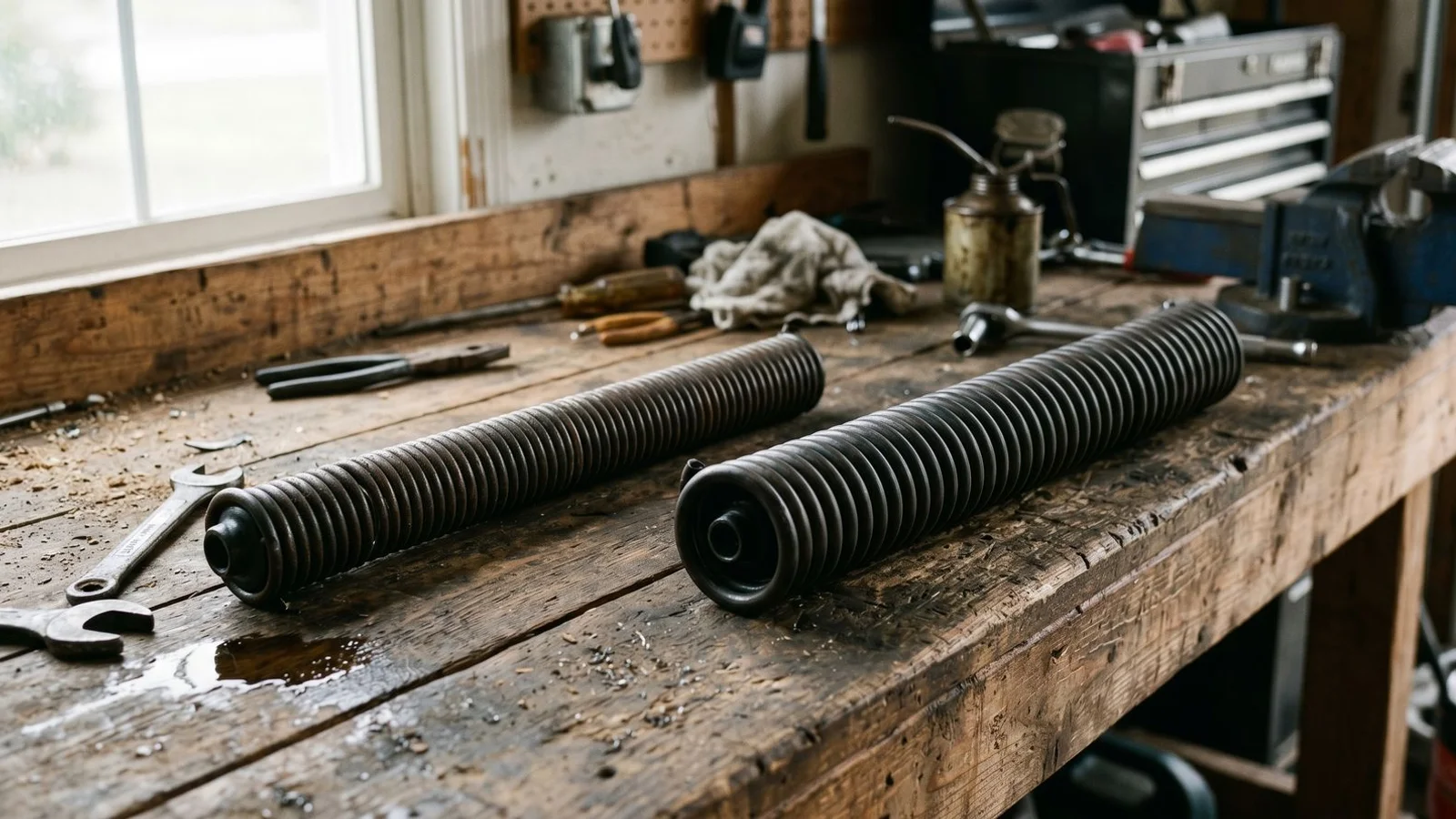
You probably already know that the single highest-leverage upgrade in any garage door repair is picking the right cycle rating. At Garage Doors of Fayetteville, our technicians replace hundreds of broken systems every month across Northwest Arkansas.
Seeing the same predictable failures makes the math incredibly clear.
The difference between 10000 vs 25000 cycle garage door springs comes down to one simple fact. High cycle springs use thicker steel to handle daily wear, doubling the lifespan for a fraction of the cost.
Let’s look at the data to understand what these ratings actually mean for your home. Then, I will break down the true lifetime costs and show you exactly how to choose the right replacement.
Cycle Rating Definitions: 10000 vs 25000 Cycle Garage Door Springs
A cycle is one full opening and one full closing of your garage door. Manufacturers use these cycle ratings to specify the expected lifespan of their steel torsion systems.
- 10,000-cycle (builder-grade): This is the standard cheap spring made from thinner steel wire. Builders install these in new construction simply to hit the one-year warranty minimum at the lowest possible cost.
- 25,000-cycle (premium residential): These high cycle springs feature a thicker wire gauge, usually .225 or .250, making them much more durable against metal fatigue. This is the right choice for most family households wanting reliable performance.
- 50,000-cycle (commercial / heavy-use): Heavy-duty applications require maximum longevity. You will pay a premium price, but these handle extreme daily use without snapping.
We always recommend oil-tempered steel over galvanized options for high-cycle upgrades. Galvanized springs might resist rust, but they lose tension quickly and require constant adjustments.
Lifetime Cost Math
Let’s break down the actual 2026 numbers for a typical American family. Most households run 4 to 6 cycles per day, which totals about 1,800 cycles per year.
We frequently see homeowners surprised by the hidden labor costs of repeated spring replacements. Paying a technician’s dispatch and labor fee twice destroys any savings you got from buying the cheaper parts. The typical US replacement cost now averages around $250 to $450 total.
| Spring | Cost (pair, installed) | Lifespan | Effective $/year |
|---|---|---|---|
| 10K cycle | $375 to $475 | 5 to 7 years | $54 to $95 |
| 25K cycle | $450 to $575 | 13 to 17 years | $26 to $44 |
| 50K cycle | $600 to $800 | 25+ years | $24 to $32 |
The 25K option cuts your per-year cost roughly in half compared to the 10K spring. A 50K spring offers marginally better annual math, but the steep upfront premium rarely makes sense for standard residential setups.
Use-Pattern Recommendations
Understanding your daily habits is the easiest way to pick the correct rating.
- Low use (1 to 2 cycles/day): Single retirees, couples with one car, or weekend-only users fall into this category. A standard 10K cycle spring is perfectly fine here. You will easily get 15 or more years of life at this low frequency.
- Standard use (4 to 6 cycles/day): This covers a typical family of three to four with a two-car attached garage and regular commutes. The 25K cycle is the undisputed sweet spot. Expect 13 to 17 solid years before needing another replacement.
- Heavy use (8+ cycles/day): Large families, multiple drivers, or households that use the garage as their primary front door burn through cycles fast. A 25K cycle minimum is absolutely mandatory. Consider pushing up to a 50K rating if your daily count consistently hits 12 or more openings.
- Commercial: Warehouses and auto shops demand a 50K cycle minimum. Most industrial facilities go much higher to prevent expensive operational downtime.
Upgrade Pricing Premium
At our shop, moving from a standard 10K to a premium 25K spring costs very little extra. The typical 2026 upgrade premium breaks down like this:
- Single spring: +$30 to $60
- Pair: +$60 to $120
Our pricing reflects the slight increase in material costs for the thicker steel wire. You are paying a very small premium for two to two-and-a-half times the lifespan.
The math heavily favors the upgrade for almost every customer. Only a very low-use, single-occupant household should stick with the basic option.
Why Most Builder-Grade Springs Are 10K
New construction across Northwest Arkansas uses 10K cycle springs almost universally. Fast-growth subdivisions in Centerton, Bentonville, and Pinnacle Hills are prime examples of this cost-cutting tactic.
Builders optimize their material choices for short-term warranty survival, not your long-term lifetime cost. A standard home warranty usually expires after a year. For a homeowner who buys new and stays for seven years, the 10K spring will inevitably snap right around that 5-to-7-year mark.
Pro-Tip: If your home is 5 to 7 years old and still has the original builder-grade springs, budget for a replacement this year. They fail on a highly predictable schedule.
We answer emergency calls in these newer subdivisions every single week. Replacing aging original springs proactively with a 25K cycle garage door spring upgrade is a very smart move. Doing this now prevents a loud, dangerous midnight break and sets your door up perfectly for the next 15 years.
Identifying Your Current Spring Rating
Figuring out what is currently hanging above your door requires looking at a few specific details. Standard residential systems usually feature a 2-inch inner diameter.
Our technicians can usually identify the exact rating on-site by checking three factors:
- Wire gauge: Thicker wire directly equals a higher cycle rating and better fatigue resistance.
- Spring length: Longer springs typically carry higher cycle ratings when matched with the same wire gauge.
- Manufacturer markings: Stamped numbers or painted color cones on the spring body indicate the exact specifications.
If your Northwest Arkansas home was built after 2010 with builder-grade materials, those springs are almost certainly 10K. Unless a previous owner specifically requested a high cycle spring upgrade, you have the basic model.
How to Order the Upgrade
When you schedule a spring replacement, you must ask specifically about the 10000 vs 25000 cycle garage door springs comparison. Specify that you want oil-tempered steel rather than galvanized to avoid annoying tension loss over time.
We default to recommending the 25K option for almost all residential cases. Mention any of these phrases to your technician, and you will get exactly the right hardware:
- “I want high cycle springs that will not need replacing again for 15+ years.”
- “We operate a high-use family garage and need heavy-duty wire.”
- “I would rather pay once and forget about it.”
Call (479) 469-8829 for your spring repair with cycle-rating consultation.
Frequently Asked Questions
Is the upgrade worth it?
Almost always — you're typically paying 25 to 40% more for 100 to 150% more lifespan. Math favors the upgrade for most families.
Can you tell what cycle rating my current springs are?
Usually yes, by wire gauge and length. Builder-grade springs in newer homes are almost always 10K.
Are there 50,000-cycle springs?
Yes — typically for commercial applications. We rarely recommend them for residential because the cost premium outpaces the lifespan benefit.