Broken Garage Door Spring Repair
DIY Garage Door Spring Repair: Why It's Genuinely Dangerous
Torsion springs store enough energy to break bones. See why YouTube tutorials understate the risk and what to do instead.
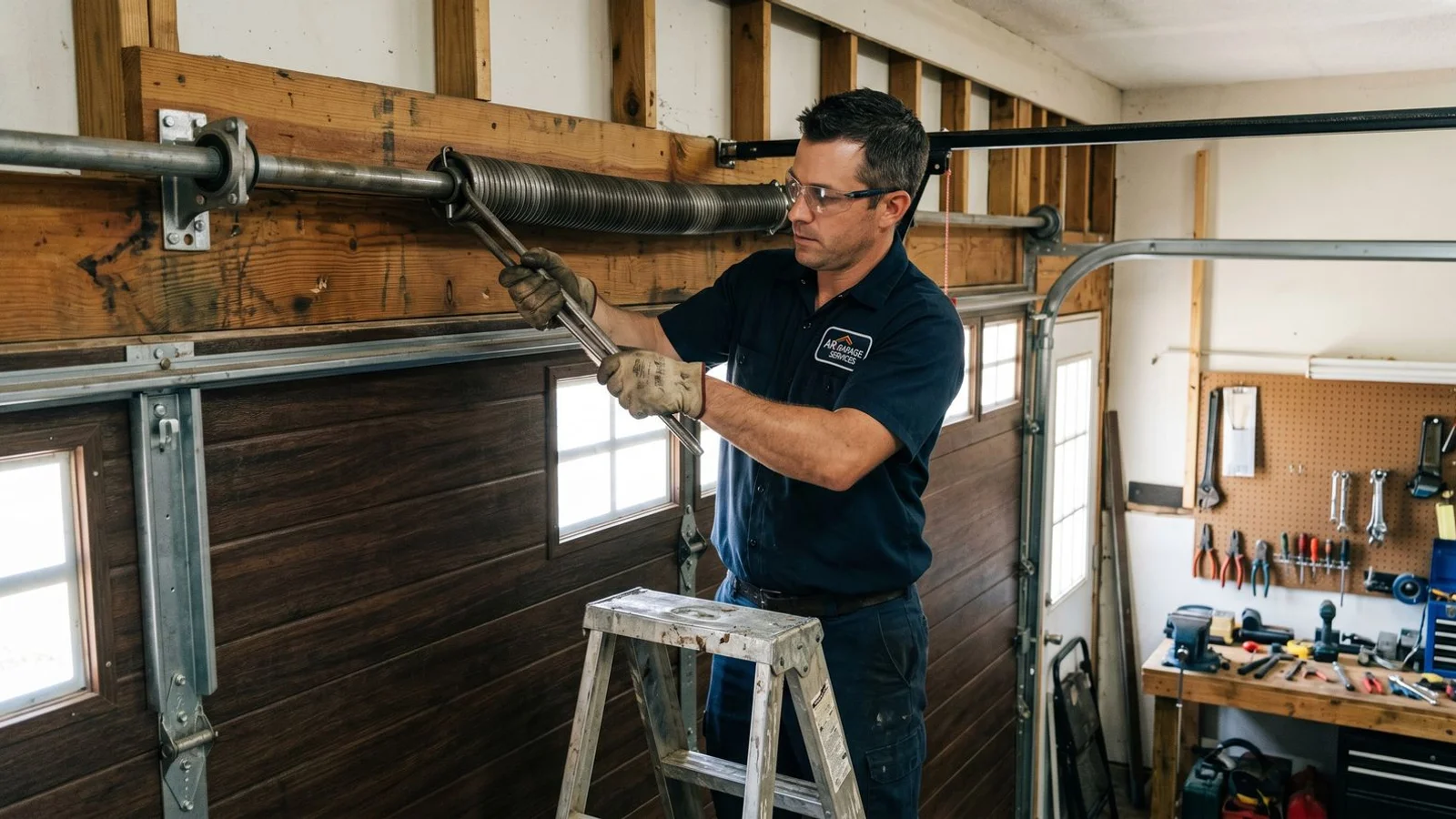
You have probably searched for a quick tutorial online, but most videos gloss over the true diy garage door spring repair danger.
Our team sees the aftermath of these weekend projects on a weekly basis.
A standard wound torsion spring stores enough energy to cause severe trauma if a single step goes wrong. Those upbeat videos skip over the physics and the hidden hazards entirely.
We will break down the hard data behind these accidents and explain why this specific job requires professional tools.
The Stored-Energy Problem: The Real DIY Garage Door Spring Repair Danger
Torsion springs handle the heavy lifting for your garage door by storing massive amounts of mechanical energy. A standard residential door requires the spring to be wound tight with seven to nine quarter-turns of tension.
Our technicians measure this stored power constantly, and the numbers are staggering. A typical 150-pound residential door spring holds roughly 563 foot-pounds of energy when fully wound. This amount of force acts like a coiled trap waiting to be sprung.
We have seen what happens when that energy releases instantly instead of gradually. The release of that tension causes violent, unpredictable movements. A sudden failure can easily trigger the following hazards:
- Driving a heavy steel winding bar across your garage at ballistic speeds.
- Tearing the wound spring apart if the bars slip out of the winding cone.
- Snapping the anchor bracket right off the wall if the hardware is installed incorrectly.
- Causing the entire door to drop in a free-fall if tension is lost abruptly.
You cannot step back or react fast enough to avoid the impact. The failure happens in a fraction of a second.
Garage Door Spring Injury Rates and The DIY Danger
Emergency rooms across the United States treat thousands of patients every year for preventable garage door accidents. The risk of severe trauma spikes dramatically during a torsion spring DIY project.
According to 2025 data from the National Electronic Injury Surveillance System (NEISS), garage door-related incidents account for more than 20,000 emergency room visits annually. Over 2,000 of these cases involve severe crushing injuries.
Our crews often hear horror stories from homeowners who thought they could manage the tension with standard hand tools. The blunt force from a slipping winding bar or a falling door causes extensive damage. Medical reports detailing a garage door spring injury frequently list the following severe outcomes:
- Complex hand fractures: Winding bars forcefully kick back, shattering fingers and wrists.
- Facial lacerations: Metal fragments or slipping bars strike the face and eyes.
- Concussions: The sudden recoil knocks homeowners backward off their ladders.
- Crushing trauma: The door crashes down on hands or bodies if the springs are removed prematurely.
- Severed digits: Fingers get pinched and trapped between the tight spring coils during the winding process.
We strongly advise against taking these risks to save a few dollars. The physical toll of a mistake far outweighs the perceived financial benefit.
Why YouTube Tutorials Are Misleading
Video tutorials make spring replacement look effortless by editing out the complicated safety checks and specific tool requirements. The hosts usually gloss over the exact specifications needed to balance the door safely.
Tool Sizing and Fit
The exact diameter of your winding bars must perfectly match the holes in the spring’s winding cone. Standard hardware store bars usually run slightly undersized for modern high-cycle springs.
Our professional kits include half-inch cold-rolled steel bars machined for an exact fit. Using a loose tool or a makeshift substitute like a screwdriver will almost certainly cause a slip under tension.
Spring Identification and IPPT
Getting the right replacement part involves complex math, not just visual matching. Wire gauge, inside diameter, total length, and wind direction all have to be exact.
We use the Inch Per Pound Turns (IPPT) formula and follow DASMA Standard 171 color-coding to identify the exact lift requirements. Your door will not balance if you purchase a generic spring online.
Crucial Safety Setup
Online videos rarely show the extensive safety preparations required before touching the hardware. The door must be locked securely in the down position using heavy-duty vice grips clamped onto the vertical tracks.
Our safety protocol always includes disconnecting the automatic opener first. Anyone standing nearby must stay completely clear of the swing arc during the entire winding phase.
Ignoring the Failure Modes
Tutorials almost never show the catastrophic results of a mistake. Framing this task as an easy weekend chore completely masks the genuine risk of a rapid energy release.
You do not get a second chance if the winding cone cracks or the bar kicks back.
What Professional Spring Work Looks Like
Professional technicians follow strict safety protocols and use calibrated tools to manage the tension safely. A standard residential pair replacement takes a trained expert about 45 to 90 minutes to complete.
Our trucks are stocked with the exact materials needed to secure the site and match your door’s specifications. Doing the job right requires a significant investment in specialized equipment.
We rely on a specific set of tools and standards for every job:
| Professional Tool / Protocol | Purpose and Benefit |
|---|---|
| Cold-Rolled Winding Bars | Machined to fit perfectly and prevent slipping. |
| Heavy-Duty Track Clamps | Locks the door closed to prevent sudden free-fall. |
| DASMA Safety Standards | Ensures proper IPPT matching and cycle testing. |
| Standard PPE | Steel-toe boots and safety glasses protect against impact. |
| Calibrated Balance Test | Verifies the door lifts smoothly with two fingers. |
Our standard process always involves a dual-technician setup for heavy double-spring systems. This extra precaution guarantees that the tension is managed safely from start to finish.
What to Do Instead
The safest and most cost-effective solution is to hire a licensed garage door technician. Professional spring replacement usually runs between $250 and $500 for a pair, including parts and a warranty.
Our pricing makes replacing both springs together much cheaper than paying for two separate service calls down the road. The financial risk of a DIY failure easily eclipses the cost of professional labor. A 2025 healthcare study shows that the average emergency room visit for a complex hand fracture or laceration can quickly surpass $10,000.
Let us compare the potential expenses of a botched repair against a professional service:
- Emergency Room Visit: $3,000 to $15,000 or more, depending on the severity of the fracture or cut.
- Trapped-Car Emergency Call: $400 or more, usually accompanied by a steep after-hours surcharge.
- Damaged Opener Motor: $400 to $700 to replace a unit stripped by operating with the wrong spring tension.
- Property Damage: Hundreds of dollars to replace bent tracks or smashed door panels.
You lose money on a DIY attempt even in the best-case scenario if you have to buy the correct specialty tools. Calling a local expert protects your wallet and your physical safety.
The Bottom Line
Replacing a torsion spring is feasible only if you are a professional mechanic with industrial maintenance experience and the right equipment. Ignoring the diy garage door spring repair danger simply does not justify the minimal savings for the average homeowner.
Our team has the tools and the training to handle this dangerous tension safely.
Call (479) 469-8829 for same-day professional spring repair. We provide a free diagnostic evaluation and a written estimate before the work begins. Every job includes a full warranty on parts and labor.
Frequently Asked Questions
Can I really get hurt working on a garage door spring?
Yes. Torsion springs under tension store enough energy to break bones, lacerate faces, and damage eyes. ER visits from DIY spring repair are common.
What about replacing extension springs — is that safer?
Extension springs require safety cables and the door has to be locked open. Still risky enough that we recommend a pro.
How much does professional spring replacement actually cost?
$225 to $525 per spring set, including parts and labor. Much less than an ER visit and far less than the trapped-car emergency you're trying to avoid.