Broken Garage Door Spring Repair
How Many Years Should a Garage Door Spring Last?
10,000-cycle springs average 7 years; 25,000-cycle springs last 15+ years. Match cycle rating to your daily use pattern.
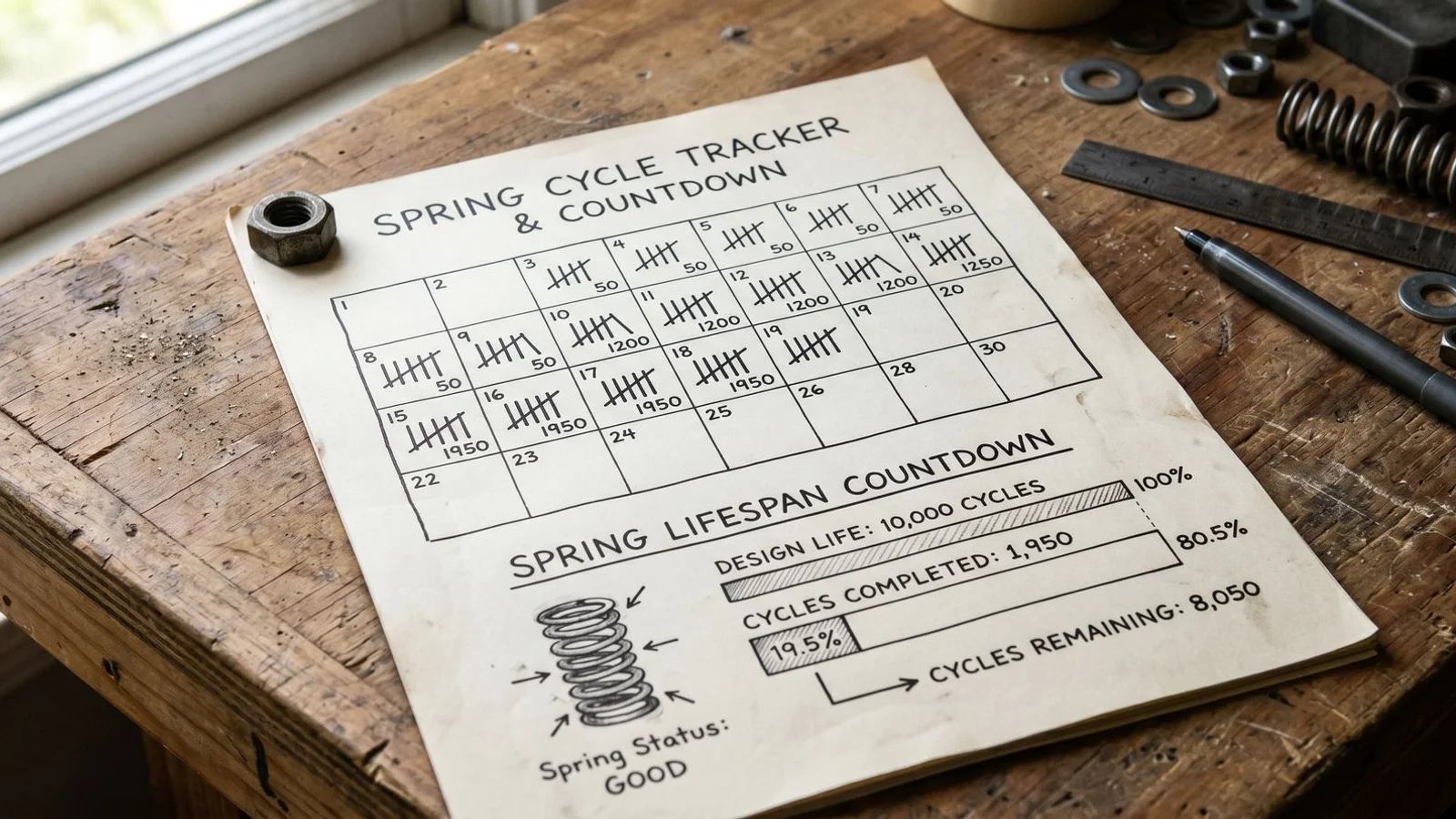
Many local homeowners assume a new garage door hardware setup will last for decades. The truth is that garage door spring lifespan is measured in cycles, not years. One cycle equals one complete open and close motion.
As the team at Garage Doors of Fayetteville providing premium repair and installation services, we often see standard springs snap unexpectedly because families misunderstand this simple metric. Predicting that failure requires basic math and an honest assessment of your daily routine.
Here is a breakdown of the standard lifespans, the warning signs of fatigue, and how to choose the right replacement.
Cycle Math
Major manufacturers like Clopay and Amarr equip most standard residential doors with 10,000-cycle torsion springs. Torsion springs sit horizontally above the opening and typically outlast the cheaper side-mounted extension springs.
We calculate the lifespan by looking at your daily habits. A typical two-car Fayetteville family runs the door four to six times per day on average, translating to roughly 1,825 cycles every single year.
That spring cycle math dictates exactly how long your hardware will survive. Consider these baseline estimates for a home averaging five cycles per day:
| Spring Cycle Rating | Estimated Lifespan (5 Cycles/Day) | Typical Application |
|---|---|---|
| 10,000 Cycles | 5 to 6 years | Standard Builder Grade |
| 25,000 Cycles | 13 to 15 years | Upgraded Residential |
| 50,000 Cycles | 27+ years | Commercial / Heavy Duty |
Our team strongly recommends high-cycle options for busy, multi-driver households. A single occupant might only trigger two cycles daily, stretching a basic 10,000-cycle spring to twelve years of service. A family with teenage drivers and frequent errands easily hits ten cycles a day, burning through that same spring in under three years.
Use-Pattern Examples
Homeowners frequently ask us, how long do garage door springs last? Predicting your exact replacement timeline requires an honest assessment of your driveway traffic.
The U.S. Consumer Product Safety Commission consistently tracks injuries from snapped springs, proving that ignoring wear patterns is extremely dangerous.
We categorize local properties into four distinct usage profiles. Matching your household to one of these examples will clarify exactly what hardware you need.
Common Residential Profiles
- The Light-Use Household: A retiree couple or single driver working from home might hit one to two cycles daily. A standard 10,000-cycle spring easily lasts twelve to fifteen years in this scenario.
- The Commuter Family: A standard family of four with two cars usually averages four to six cycles a day. Expect a basic 10,000-cycle spring to snap in five to seven years.
- The High-Traffic Home: Families with multiple teenagers, home businesses, and constant Amazon deliveries often exceed ten cycles daily. A standard spring fails in two to four years here, making a 25,000-cycle high-carbon steel upgrade mandatory.
- The Delivery Hub: Commercial properties or home workshops seeing twenty or more cycles daily require industrial solutions. You must install 50,000-cycle springs and heavy-duty steel hardware to prevent constant breakdowns.
Our technicians frequently see LiftMaster and Chamberlain opener motors burn out early because homeowners forced them to lift heavy doors with dead springs. Choosing the correct cycle rating protects the entire automated system.
What Shortens Lifespan Below the Cycle Rating
Even top-tier hardware will fail prematurely if environmental factors degrade the metal. Northwest Arkansas weather creates specific challenges that drastically reduce cycle counts.
We regularly replace broken hardware that should have lasted another five years. Several common issues accelerate metal fatigue and lead to unexpected failures.
The Hidden Threats to Spring Health
- Arkansas Humidity: Standard oil-tempered springs feature a factory oil coating that breaks down in damp conditions. This causes surface rust and deep pitting, which weakens the high-carbon steel.
- Improper Door Balance: An unbalanced door forces the spring to carry weight beyond its safe design load.
- Poor Lubrication Choices: Using standard WD-40 instead of a proper white lithium grease attracts dirt and increases friction.
- Cold-Weather Thickening: Winter temperatures cause cheap lubricants to turn into a sticky paste, making the metal work twice as hard.
- Hardware Damage: A minor vehicle impact that bends a track or twists a panel creates severe drag on the lifting system.
Our crew recommends specific preventative steps to fight these exact issues. Scheduling Annual tune-ups protects your investment by addressing rust, balance, and lubrication before the tension snaps.
When to Proactively Replace
You do not have to wait for a loud bang in the garage to know it is time for new parts. Catching the decline early saves you from dealing with a trapped car on a busy Monday morning.
We advise homeowners to act once the hardware crosses the 70 percent mark of its rated cycle life. Physical wear signs like excessive squeaking, deep surface rust, or visible gaps between the coils indicate a severe loss of tension.
The Benefits of Replacing Early
Taking action before a catastrophic failure provides several financial and practical advantages.
- Avoiding Emergency Fees: Current 2026 industry data shows that after-hours emergency service can easily add a $100 to $200 surcharge to your final bill.
- Smart Pair Replacement: Garage door springs operate as a balanced pair, so if the left side fails, the right side is directly behind it. Proactive scheduling lets you replace both at standard pricing.
- Upgrading on Your Terms: A planned service call gives you the flexibility to select a higher cycle rating without feeling rushed.
- Included System Rebalancing: A professional replacement includes a full tension recalibration, ensuring your automatic opener motor runs smoothly.
Our maintenance packages focus on spotting these warning signs early. Paying for a scheduled visit is always cheaper than funding an emergency rescue operation.
Upgrade Math
Investing in premium parts at the time of repair generates massive long-term savings. Standard 2026 replacement costs for parts and labor typically range from $250 to $450 for basic 10,000-cycle hardware.
We suggest reviewing the numbers before settling for the cheapest option. If your technician is already on site and disassembling the tension tube, upgrading to a 25,000-cycle spring makes perfect financial sense.
| Upgrade Factor | The Financial Reality |
|---|---|
| Upfront Cost Premium | $60 to $120 extra for high-cycle wire |
| Durability Gain | 2 to 2.5 times longer lifespan |
| Effective Cost Per Year | Significantly lower with the 25K option |
A family averaging five daily cycles will replace a basic set in six years, while the upgraded hardware easily lasts fifteen years. The math strongly favors the premium wire for almost everyone except the most infrequent drivers.
Your Next Steps
Our team is ready to help you analyze your specific driveway traffic to determine how long your hardware will last.
Read our comprehensive 10K vs 25K cycle comparison for a deeper look into this decision.
Call (479) 469-8829 to secure a free hardware assessment today.
Frequently Asked Questions
How many cycles per day does a typical NWA family run?
Most two-car families hit 4 to 6 cycles per day. That gives a 10,000-cycle spring about 5 to 7 years before failure.
Can you tell how many cycles are left on my spring?
Not precisely — but visible coil wear, rust, and gaps in the wraps mean failure is imminent. Annual tune-ups catch these signs early.
Are the springs the same age as the door?
Usually yes for original construction. If a previous owner had spring replacement, the springs may be newer than the door itself.