Garage Door Installation
Signs It's Time to Replace Your Garage Door
Five clear signs your garage door is at end of life — age, repeated repairs, panel damage, energy loss, and missing safety features.
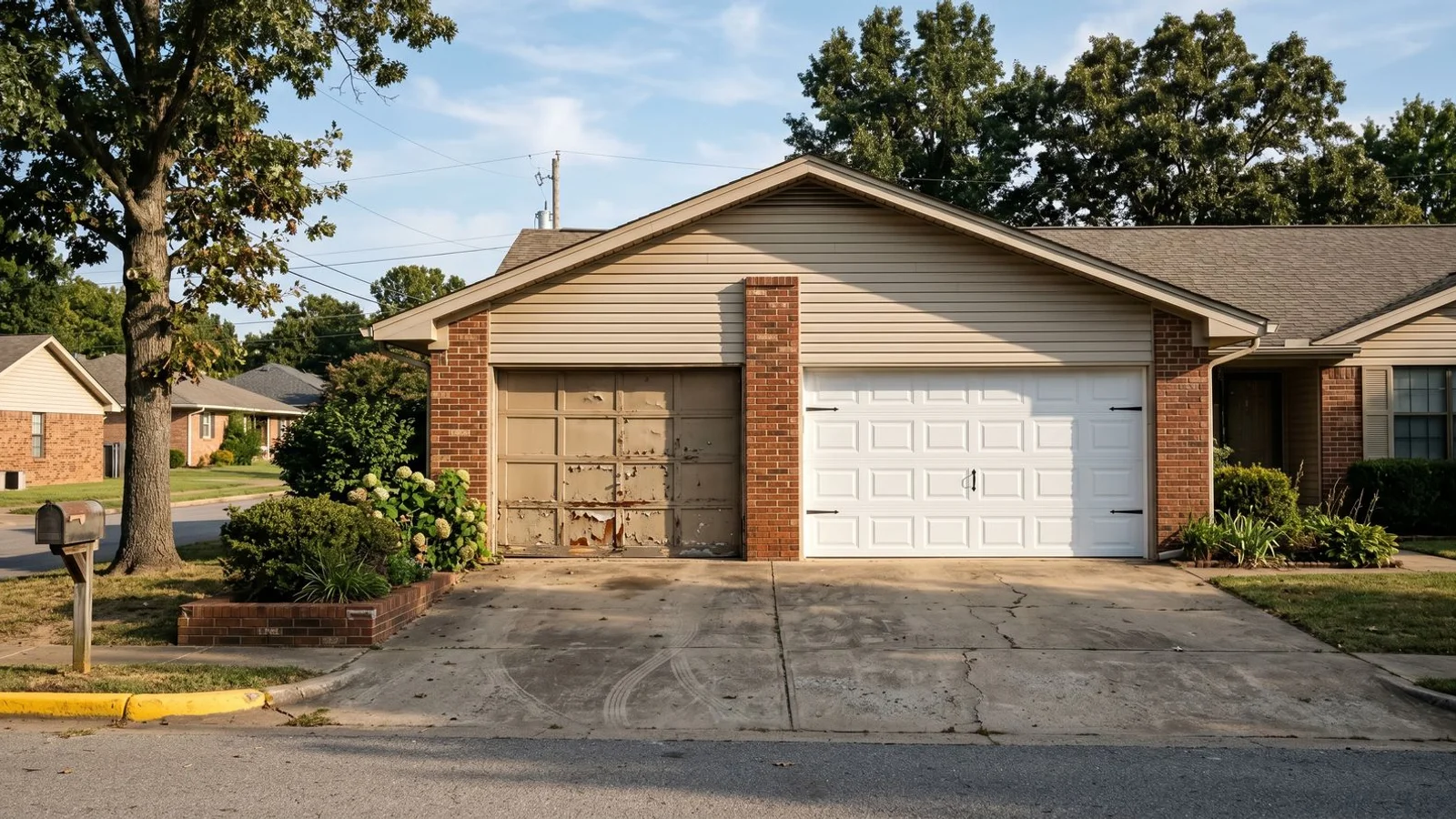
We often see homeowners wrestling with the decision of whether to replace or repair garage door components as their system ages. The math on this choice has actually changed significantly in recent years. According to Zonda’s 2025 Cost vs. Value Report, a new installation delivers a massive 268% return on investment at resale.
Our diagnostic process focuses on finding the most cost-effective path for your specific home. A standard steel setup typically lasts 15 to 25 years, while premium wood options can stretch to 30.
Let’s look at the five concrete signs you need a new garage door to save money and frustration in the long run.
1. Age Past the 15-Year Mark
We generally recommend replacing a basic steel garage door once it passes its 15th birthday. Reaching this milestone is a clear indicator that the system is approaching the typical garage door end of life. Major components like torsion springs and tracks simply hit the limit of their mechanical design after a decade and a half of daily use.
Our technicians frequently notice a frustrating cascade effect with aging models from popular brands like Clopay or Wayne-Dalton. A broken torsion spring, which usually fails after 10,000 cycles, costs around $300 to fix. The logic board or safety hardware might fail just a few months later.
Our maintenance records show exactly how these parts degrade over time. Consider this typical failure timeline for standard hardware:
- Torsion Springs: Snap after 7 to 10 years of average daily cycles.
- Opener Motors: Suffer gear wear or logic board failures around the 12-year mark.
- Rollers and Hinges: Warp or rust significantly after a decade of seasonal moisture exposure.
- Weather Seals: Crack and shrink, letting in pests and drafting cold air.
Upgrading stops this endless repair cycle and immediately boosts the exterior appeal of your property.
We advise against pouring hundreds of dollars into equipment that will inevitably break down again before the year ends. A fresh installation provides long-term peace of mind. It secures your home against unexpected mechanical emergencies.
2. Multiple Repairs in 12 Months
We strictly apply the 50% rule when evaluating a series of recent mechanical breakdowns. If your repair bills over the last 12 months total more than half the cost of a new installation, replacement is the smarter financial move. The national average for a standard steel replacement currently sits around $1,500 to $2,000.
Our team frequently sees homeowners sink $800 into replacing tracks and cables, only to have the motor die shortly after. Those mounting repair costs are a flashing warning sign that the core structure is failing. Comparing exact costs makes the decision much clearer.
We use this breakdown to help customers evaluate their options. Review these average 2026 repair costs versus a full replacement:
| Component | Average Repair Cost | Lifespan Added |
|---|---|---|
| Torsion Spring | $150 to $350 | 7 to 10 years |
| Logic Board | $200 to $300 | Varies widely |
| Cable & Track | $200 to $400 | 5 years |
| New Steel Door | $1,500 to $2,000 | 15 to 25 years |
A fresh installation resets the clock on all maintenance issues at once.
We present these numbers transparently during inspections so you avoid throwing good money after bad. Stopping the cycle of constant fixes protects your wallet in the long run. A single, definitive upgrade eliminates the stress of unpredictable repair bills.
3. Panel Damage and Rust
We can easily swap a single panel if a vehicle lightly backs into an otherwise healthy door. Minor, isolated dents do not require tearing out the entire system. Extensive damage across multiple sections usually indicates structural weakness that partial fixes cannot resolve.
Our suppliers frequently change their stamping patterns every 10 years, making exact replacement sections for older models impossible to find. Manufacturers phase out specific colors and profiles over time. Sourcing a discontinued part often results in a glaring visual mismatch on the front of your home.
We look for specific types of wear that compromise both safety and operation. Certain types of severe degradation require immediate attention. Watch out for these severe warning signs of panel failure:
- Rust creeping along the bottom section means moisture has penetrated the metal core.
- Peeling paint across several panels often hides deeper oxidation issues.
- Structural cracking at the seams can cause the door to buckle entirely while in motion.
- Warped wooden sections will strain the motor and throw the tracks out of alignment.
Our goal is to ensure your property remains secure and visually appealing. Replacing a heavily damaged facade is the only way to restore full strength. It also provides a massive boost to your property’s curb appeal.
4. Energy Loss in an Attached Garage
We always check the insulation quality when a customer complains about hot summers or freezing winters in an attached garage. A standard two-car setup creates a massive 112-square-foot opening in your home’s thermal envelope. The 2024 International Energy Conservation Code (IECC) pushes builders toward higher efficiency standards for a valid reason.
Our technicians highly recommend upgrading to a model featuring a polyurethane core rated between R-12 and R-18. Products like the Raynor Aspen Series hit that R-18 mark, dramatically reducing the workload on your HVAC system. The original seals and panels degrade silently over the years.
We often spot the same common indicators of thermal failure during routine inspections. A failing barrier will show several distinct symptoms:
- Visible daylight creeping under the closed bottom edge.
- Brittle, cracked weather stripping along the vertical tracks.
- Distinct drafts felt at the seams during windy weather.
- Metal panels that feel icy to the touch during January freezes.
A properly insulated replacement quickly pays for itself through lower monthly utility bills.
We calculate that these energy savings make high-R-value options a smart investment. Keeping that space comfortable also protects your stored tools and vehicles from extreme temperature swings. Consistent climate control adds functional square footage to your floor plan.
5. Missing Modern Safety Features
We refuse to compromise on safety, especially when dealing with the largest moving object in your house. Federal regulation UL 325 mandated strict entrapment protection standards back in 1993. Any system predating that law lacks essential photo-eye sensors, making it a serious hazard for children and pets.
Our security assessments also target older remote controls that rely on outdated fixed-code technology. Openers built in the 1980s and early 1990s are highly vulnerable to hacking. Modern operators use rolling-code technology, generating a unique signal from billions of possibilities every time the button is pressed.
We strongly advise upgrading to access these crucial advancements. A modern installation includes several non-negotiable safety upgrades:
- Photo-Eye Sensors: Automatically reverse the motor if an object breaks the invisible infrared beam.
- Pinch-Resistant Panels: Flush-joint designs prevent fingers from getting caught between folding sections.
- Rolling-Code Security: Blocks tech-savvy thieves from copying your remote signal.
- Battery Backup: Ensures you can still operate the heavy door safely during a local power outage.
These features provide critical protection for your family and your belongings.
We will not service a unit if a previous owner intentionally bypassed or removed the factory sensors. Bringing your home up to modern compliance is simply the right thing to do. It guarantees your heavy equipment operates without posing a daily risk.
When Repair Still Makes Sense
We want to be clear that plenty of older units still have years of reliable performance left in them. A 12-year-old insulated steel door with one snapped spring is an excellent candidate for a basic repair. Replacing that spring and performing a full tune-up costs around $500, leaving the door with plenty of life.
Our team will gladly swap out a tired motor while keeping your 15-year-old, structurally sound exterior panels intact. A massive overhaul is not always necessary to restore smooth, quiet operation. Small interventions often extend the lifespan of quality materials.
We diagnose the actual condition of your equipment on-site and provide straightforward advice.
Finding the perfect balance between a quick fix and a smart long-term investment requires an honest assessment.
Call (479) 469-8829 for a free estimate that compares these costs clearly.
We look forward to helping you make the best decision for your home. Your property deserves a reliable, beautiful entryway. Professional guidance ensures you spend your budget wisely.
Frequently Asked Questions
How old is too old for a garage door?
Most steel doors last 15 to 25 years. Once you're past 20 and starting to need annual repairs, plan for replacement before the next major failure.
Should I replace just the opener or the whole door?
If the door is structurally sound, replace just the opener. If the door is dented, rusted, or non-insulated, replacing both at once is usually the better value.
Will a new garage door pay back in resale value?
Yes. Remodeling Magazine's Cost-vs-Value Report consistently shows garage door replacement returning 190%+ of cost — the highest ROI of any common home upgrade.