Broken Garage Door Spring Repair
How to Tell If Your Garage Door Spring Is Broken
Five clear signs a torsion or extension spring just broke. Stop operating the door immediately and call a Fayetteville tech.
You know how frustrating it is when the main entry point to your home suddenly stops working.
A recent 2026 industry failure report confirms that torsion spring fatigue causes 42% of all residential overhead door breakdowns. That metal coil does the heavy lifting every time you leave the house.
Knowing the exact signs garage door spring is broken can save you time and prevent serious injuries. Our team at Garage Doors of Fayetteville uses these specific visual and physical cues to diagnose the problem.
This straightforward checklist is the exact one dispatchers use before sending a technician. Let’s look at the facts and explore practical ways to respond safely.
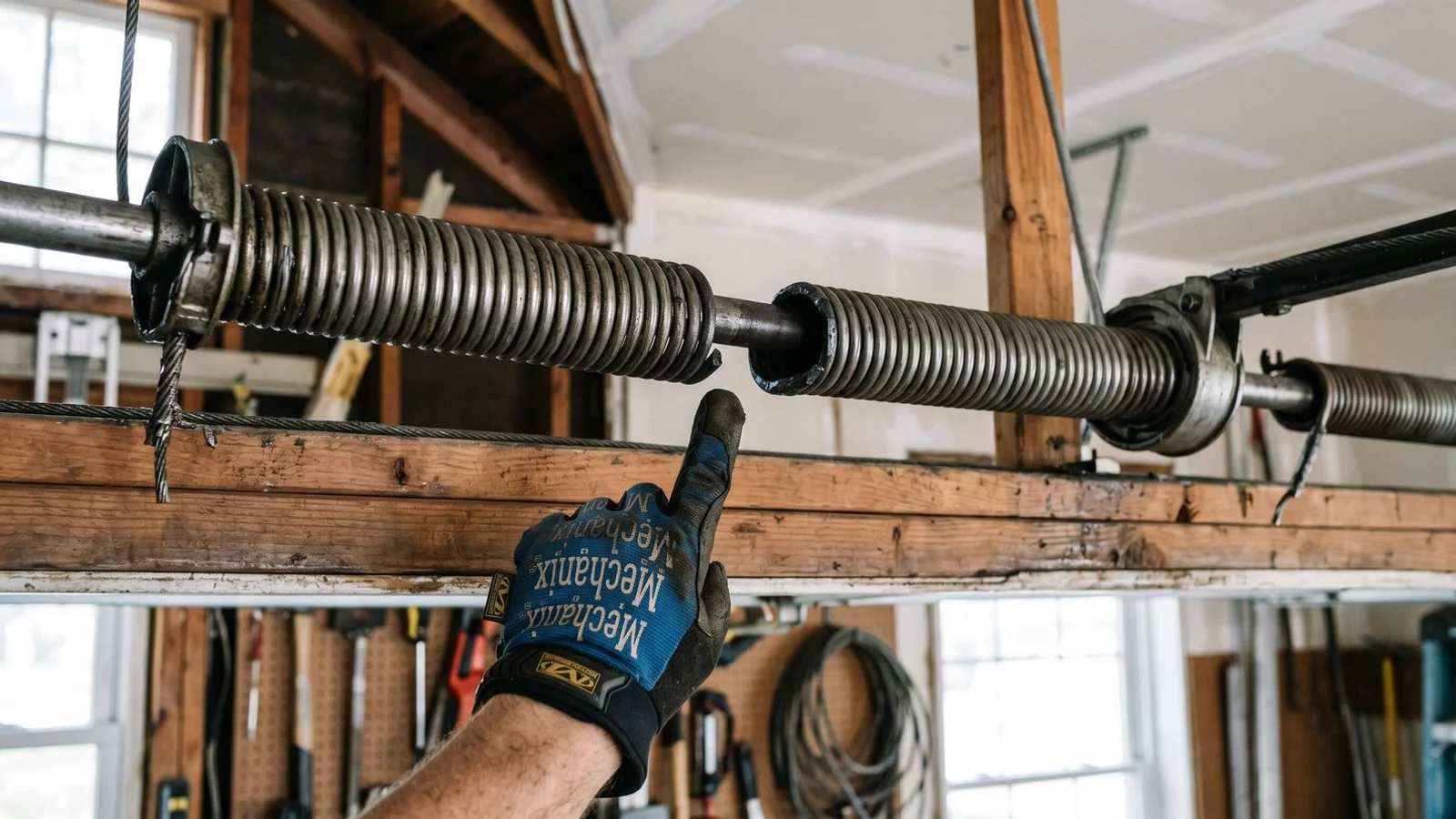
1. Visible Gap in the Torsion Coil
A clear one to three-inch separation in the metal coil above your door is a classic example of garage door spring failure. You will see two distinct halves sitting loosely on the horizontal shaft.
We always check this spot first because it provides immediate visual proof of the issue. Most factory-installed coils are rated for 10,000 cycles by the Door & Access Systems Manufacturers Association (DASMA).
That lifespan usually translates to about seven to ten years of standard family use. Once the metal reaches its fatigue limit, the immense tension causes it to snap violently.
Here is what to look for when inspecting the shaft:
- A noticeable split in the center or side of the dark metal spring.
- Sagging or loose safety cables near the drums on either end.
- Black metal dust collected on the wall directly behind the break.
- Two separated coil sections that look slightly unwound.
2. Door Suddenly Too Heavy to Lift
If you pull the red emergency release cord and cannot easily lift the door manually, you have a failed spring. A balanced system should require no more than 10 to 15 pounds of upward force to open.
Our technicians often see homeowners strain their backs trying to force an unsupported door open. A standard modern steel door weighs around 150 to 250 pounds, while custom solid wood options can easily exceed 400 pounds.
Without the counterbalancing force of a tight metal coil, you are lifting that entire dead weight by yourself. This sudden heaviness is a massive safety hazard.
To safely perform the lift test, follow these steps:
- Ensure the door is completely closed before pulling the red cord.
- Grab the bottom handle and attempt to lift it just a few inches.
- Stop immediately if it feels like lifting a car engine.
- Let the panel slide back down slowly to avoid slamming.
3. Loud Bang Earlier in the Day
A sharp, explosive noise sounding like a gunshot from inside the garage is the unmistakable warning of a snapping spring. This happens because the component violently releases a massive amount of stored rotational energy.
We hear from panicked customers every winter who think someone broke into their home. Data from a 2026 service trend report shows a 38% spike in broken garage door spring service calls during the cold months of December through February.
The dramatic temperature drops overnight put maximum stress on aging steel. If you heard a loud crash while drinking your morning coffee, the coil has likely reached its breaking point.
Common noises associated with this specific failure include:
- A deafening metallic crack echoing through the house.
- The sound of heavy metal parts hitting the concrete floor.
- A loud grinding noise followed by a sudden drop.
- Rattling safety cables whipping against the metal tracks.
4. Opener Hums or Strains Without Moving the Door
When the opener motor hums loudly but the panels refuse to budge, the spring is no longer assisting the lift. The electric motor is only designed to guide a balanced system, not to hoist hundreds of pounds of dead weight.
Our local crews frequently replace destroyed opener motors because residents kept pressing the wall button. Most standard US residential openers generate about 1/2 or 3/4 horsepower, which simply cannot overcome gravity alone.
Continuing to push the remote will quickly strip the internal white nylon gear found inside popular brands like Chamberlain and LiftMaster. Once those plastic teeth shear off, you will need a complete gear kit replacement to restore function.
| Warning Sign | What It Means | Required Action |
|---|---|---|
| Loud Humming | Motor is receiving power but cannot turn the shaft. | Stop pressing the button immediately. |
| Grinding Noise | Internal nylon gears are actively stripping away. | Unplug the opener from the ceiling. |
| Lifts 3 Inches Then Stops | Safety sensors detect extreme force and trigger an auto-reverse. | Leave the door closed and call a professional. |
5. Door Hanging Unevenly (Extension Spring Failure)
If your door is hanging visibly lower on one side, an extension spring running alongside the horizontal track has likely snapped. These older tension systems typically fail one at a time, causing an immediate and dangerous imbalance.
We always advise extreme caution when dealing with crooked tracks. The U.S. Consumer Product Safety Commission reports thousands of injuries annually from improperly secured extension systems.
Modern building standards require a 1/8-inch galvanized steel safety containment cable routed directly through the center of these springs. If you do not see this braided metal wire running through yours, check out our sagging door guide for a deeper look at diagnosing crooked rollers safely.
Critical Risks of a Crooked Door:
- The remaining spring is under double the stress and could break at any second.
- Steel rollers can easily pop completely out of the vertical tracks.
- The heavy bottom weather seal can crush items left on the floor.
What To Do Right Now
Stop interacting with the wall button immediately to prevent further damage to your opener. You need to secure the area and leave the heavy lifting to a qualified professional.
Our local market data indicates that professional torsion replacement typically costs between $300 and $500 in 2026. This investment ensures proper calibration and prevents the severe injuries associated with DIY winding attempts.
Here are your immediate next steps:
- Unplug the motor unit. Pull the power cord from the ceiling outlet so nobody accidentally triggers a cycle.
- Handle trapped vehicles carefully. If you need to get to work, use our trapped car emergency guide for safe release methods.
- Avoid lifting injuries. Do not try to heave the bottom panel past your knees if it feels abnormally heavy.
- Call (479) 469-8829. We provide same-day response across Northwest Arkansas. Dispatching directly from Fayetteville allows us to reach most of Washington and Benton counties in just 60 to 90 minutes.
For a complete breakdown of what to expect, including timeline and component options, visit our spring repair service page.
If you notice any of these signs garage door spring is broken, do not attempt a risky DIY fix. A secure home starts with a safe, reliable, and low-maintenance entry point, so call us today to get your system fully operational again.
Frequently Asked Questions
Can I still use my garage door if a spring is broken?
No. The opener wasn't designed to lift the full door weight alone — you'll damage the motor and the door can fall. Call for repair.
How can I tell if it's the spring or the opener?
Pull the red emergency release cord and try to lift the door by hand. If it's extremely heavy, it's a spring. If it lifts easily, it's the opener.
How long can I leave a broken spring before fixing it?
Don't. Each cycle puts the other spring closer to failure and risks dropping the door. Schedule same-day repair.